〈タワーレコードを創った男〉にして、20世紀後半からの世界の音楽カルチャーに多大なる影響を与えたリヴィング・レジェンド、ラッセル・ソロモン。そんな彼が、〈USタワーレコードの栄枯盛衰物語〉をドキュメントする映画「All Things Must Pass: The Rise And Fall Of Tower Records」の撮影のため、この夏映画クルーと共にカリフォルニアから来日した。Mikikiでは、齢89歳にして活力漲る伝説の男であり、70年以上音楽カルチャー/ビジネスに身を置いてきた当事者である彼に、音楽についてさまざまなことを訊いた。
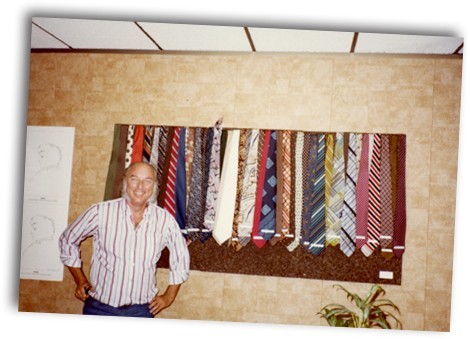
――そういえば、私がタワーレコードに入社した頃、いろんな先輩の方々に何度も聞かされたひとつのエピソードがありました。USの本社では、オフィスに来たお客さんのネクタイを切って壁にずらっと並べている……タワーっていうのはそういう会社なんだよ、と。どうして、そういうことをしたのでしょうか?
〈切った〉ことはない。〈抜き取る〉というのが正しいね。レコード会社や音楽業界の見本市やコンヴェンションが時々ロサンゼルスであったんだが、レーベルの役員なんかがニューヨークからLA、要はハリウッド周辺にやって来る。それがスーツを着てネクタイを締めているものだから、それを見てこちらも「あんたがた、音楽業界にいるんでしょう。そしてここはカリフォルニアだ。しかも暑い。どうしてネクタイなんて締めているの?」って訊く。そして、「ちょっと調整してやるよ」と言いながらネクタイをはずし、もらった名刺をそのネクタイにホッチキスで留めて、誰のものかわかるようにしたんだ。

そのうちそれを面白がる人も出てきて、業界内でネクタイをしている人や、オフィスに来る業界人からネクタイを〈盗む〉ようになった。音楽業界にいる人は、どんな事情があってもネクタイなんかするもんじゃない。そうこうするうちに誰もネクタイをしなくなったよ。
繰り返すけど、ネクタイを切ったりはしていない、まるごと抜き取ってコレクションにするんだ。そしてオフィス内のガラスケースに飾ったよ。取られることを分かっていて、わざわざ古いネクタイを締めてくる人もいたね。なかには「妻からもらったのに」「彼女からもらったものなのに~」と情けなく泣き散らす人もいたな。こっちは「いや、そういうわけにはいかん。はずせ!」と、容赦なかったけど(笑)。
――少し質問を変えます。音楽メディアのフォーマットは、時代を経るごとに変遷してきました。そのことについて個人的なご意見、または個人的に好きなものがあれば教えて下さい。
フォーマットの進化について言えば、まず新しく登場するものは、いつも前のフォーマットから改良されたものだった。つまり、LPや45回転のレコードは78回転の上をいくものだったし、ステレオLPはモノラルLPよりもずっと良かった。クアドロフォニック(4チャンネル方式)のLPはそんなに良くはなかったけど、それなりに持ったね。そうするうちにテープが登場した。最初のテープはオープンリール方式で扱いにくかった。音は良かったが高額だったし、デッキでかけるのも難しかった。
その後、カセットテープと8トラック型が同時に登場するが、世の中が受け入れたのはカセット。扱いやすくて安価に製造できたのが良かった。カセットは大人気になったけど、音質はあまりいいものではなかった。となると、結果的にそれよりも(音質が)いいものが出てくるわけで、そんな中でCDが発明されたときには、それはもう驚くべき素晴らしいものとして歓迎された。CDは実に素晴らしい。
個人的な考えを言うと、CDもさらに進歩を見せてスーパーオーディオCDやSHM-CDも製造されたのに、レーベルがそれを後押しせずうやむやにしたことは残念だ。業界がもっとSACDを支持していたらもっと良かったのに、と思う。でも、いい音質のものが出回っていたとしても、一般的なユーザーはそこまで音質にこだわっていないのかもしれない。
USでは最近面白い現象が起きていて、LP、つまりヴァイナル盤が復活している。微々たるもので、取るに足りない規模だけど、嬉しいことだし、コレクターも喜んで買っている。ただ、多くの人がヴァイナルのほうが音が良いと思っているようだが、実際にはそんなことはない。CDの音が良い、本当に良い。

――いまCDの話が出たので続けて訊きたいのですが、アメリカでは音楽を聴く方法として、iTunesなどのデジタル・ダウンロードや、スポティファイなどストリーミングが主流となっていると聞きます。そういった現在の〈音楽を聴く〉カルチャーをどう捉えていますか?
ほかの国は分からないけど、USでは音楽をオンラインで聴くことが好まれている。ダウンロードはまだ市場の大部分を占めているが、規模は徐々に小さくなっている。音楽を所有する必要がなくなっているのかもしれない。ストリーミングが支持されるようになってきているので、USでは今後、そっちが主流になるだろう。ストリーミングはその時聴きたいものをすぐに選ばせてくれるからね。個人的にはストリーミングのクォリティーが良いとは思わないけど、それも正しいかはわからない。ひょっとしたら、ほとんどの人にとっては十分なクォリティーなのかもしれない。しかもどんどん良くなっているのかも知れない。
だから、日本は特異な位置にある。ほかのどんな国よりもCDを所有し、聴いて集めることに興味があって、それが数字にも表れている。私は未来を予想することはできないが――ないとは言えないし、もし誰かが革新的な発明をしたら話は別だけど――CDはそれでも収集性が高くて音質もいいので、ストリーミングと共存できるかもしれないね。でも、やっぱり断言はできない。
――最後の質問となります。アメリカでもそうかもしれませんが、私たちタワーのスタッフが他のスタッフや音楽ファンと初めて会ったとき、まずは、〈何が好きなの?〉と音楽の話をします。そこで、ラスさんにも〈オール・タイム・フェイヴァリット〉をお聞きしたいです。
私の? 難しい質問だ、あまりにも多すぎて……遡ると、フランク・シナトラ、トミー・ドーシーやウィリー・ネルソンとかかな。私は幸運にも多くの音楽に触れる機会に恵まれて、しかも自分の気に入る音楽がほとんどだったし、本当に答えに困る質問だね。ラップはあまり得意ではないな、でもそれ以外のほとんどは大好きだ。R&B、カントリーはもちろん、ウィリー・ネルソンだけじゃなくて大概のカントリー・アーティスト。ジャズも好きだ、いろんな種類のジャズ、ビッグバンド……まぁ、これは時代を問わないね。クラシック、オペラなども全部……だから私のような人間は、というか私個人は〈ひとつを選ぶ〉なんてできない。全部好きだから。まぁ、全部と言うわけではないけど、(音楽)全部のいろんなパーツが大好きだ。
――最後にもう一つだけお聞きします。自分自身の人生にとって、〈音楽〉とはどういったものでしょうか?
人生をより良くしてくれるもの。本当にそう思う。幸せにしてくれるもの、それに尽きるね。



“The man who founded Tower Records” Russ Solomon talks about the history of the company: Part 2
Visiting Japan for the shooting of the documentary film that portrays the rise and fall of Tower Records in US, Russ Solomon looks back on the birth and growth of the chain
Interviewed and written by Daisaku Jobim
The man who founded Tower Records and exerted a considerable impact on the global music culture from the late 20th century, – Russ Solomon, the living legend. Solomon visited Japan this summer with the film crew for the shooting of the documentary film “All Things Must Pass: The Rise And Fall Of Tower Records”, – a film about the vicissitudes of the chain in the US. Mikiki had a chance to speak with the legend, a man of vitality at the age of 89, about the history of the famous retail chain and music.
*Click here for Part 1 of the interview
Q: When I joined the company, many of my seniors would tell me about this episode of your ‘cutting (neck)ties off of visitors to the US office and put the ties on the wall for people to see’. “Yup, ‘welcome to Tower Records’” the seniors would say. Why were you doing this?
It wasn’t ’cut’, it was ’take the whole thing’. The way it started., the record companies and the music industry I guess would have conventions, and sometimes the conventions or the big meetings would be in Los Angeles, and these record company executives would come out from New York to LA, Hollywood actually, and they were dressed up in suits and ties and I’d look at these guys, and I’d say, this is California, you’re in the music business, and it’s warm, why have you got a tie on? So I said, I’ll fix it, I’ll take the tie. So I started to take the tie, and get their card and I would staple the card on the tie so I knew who it came from.
And then it go to be fun, and then everybody I got near in the music business, and nobody in the music business should wear any ties, no matter what, so I began to steal ties from everybody that came into the office and everybody that we ran into that was in the music business. So they all stopped wearing ties.
I never cut any ties. I’ll take the whole tie, and collect them. And keep them in a glass case in my office. So when somebody would come to the office, they’d where an old tie. They knew it was going to get stolen. But you know, some of these guys would just cry, moan. ’This was a tie that my girlfriend, my wife, gave to me.’ No, you can’t take it off!’
Q: Moving on to a different subject, the format for (listening to) music has changed over the years. What is your opinion on this, and please tell us if you have any particular format(s) you prefer personally?
Well, the evolution of formats, almost everytime a new format came along, it was an improvement over the last. In other words, the LP and the 45 were much better than the 78s, and the stereo LP was better than the monoral LP, and the quadrophonic LP really wasn’t all that good, but it lasted for a while. And then when tape came along, the first tape was reel to reel, and that was difficult to deal with. It was expensive, the sound was good, but it was expensive and difficult to load on the machine, machines was expensive, and that wasn’t so good.
And when they invented the cassette, and the 8 track came along at the same time, the world accepted the cassette tape because the cassette was much better, more practical, cheaper to make. The cassettes got very very very popular. But the sound quality of the cassettes wasn’t so good. So consequently, something had to come along that would be better, and when they invented the CD, that was a remarkable wonderful new thing. And so the CD is great.
My personal feeling is that, they went a couple steps further than the CD, over here especially with the super audio CD and the super audio SHM CD, but the sad part of that is that the records companies didn’t promote it; they kind of let it drop. If the industry had gone into super audio, I think it would have been a little bit better. But the general public didn’t really care about the quality that good, even though the quality was there.
The interesting thing that’s happening in America is the resurgence of LPs, the vinyl. But that’s not a big deal, it’s not big enough. But it’s fun and there are lots of collectors that love it. A lot of people think that vinyl sounds better, but in reality, it doesn’t. CDs are still pretty good, -real good in fact.
Q: Since you’ve mentioned the CD, we hear that in the US, the main means to listen to music seems to be digital downloads from iTunes or streaming music from services such as Spotify etc. What is your opinion on this new ‘culture’ of listening to music?
It’s reality. I mean the Americans I’m not sure about the rest of the world, but they prefer to listen to music online. The idea of downloading is while it’s still a large part of the business, it’s slipping and people don’t need to own music. Streaming has caught on, and it looks like at least in America, streaming will be more or less the future. Particularly said streaming will get to a ability to select what you want to listen to precisely. My personal feeling is that quality isn’t good, but I’m not sure if I’m right. It could be that the quality is just fine for most people. And gets better all the time.
So, Japan I think is a pretty unique place in the fact that there is more interest in owning and listening and collecting CDs probably than any place in the world, and it’s true. And so I don’t know that I can even try to predict the future, I don’t know if anyone will invent something new, it’s possible, you know, but I think that hopefully at least, because of its collectability and its quality, will be able to live alongside of streaming for the long time future, but I don’t know.
Q: One of the last questions. The same may apply in US, but for us here, when staffs meet someone new or music fans, we first ask what music they like. So please, tell us your all-time-favorite(s).
Mine? Well, that’s a pretty hard question. I have so many all-time favorites. It will go back to Frank Sinatra, Tommy Dorsey, Willy Nelson. It’s an impossible question to answer for me because I’ve had the good luck to have been exposed to so much different kinds of music most of which I like. I don’t care so much for rap, I really don’t, but I do love most everything else, I really do. I like R&B, I certainly like country, I love various artists, Willy Nelson, any country artist really, I certainly like jazz, all kinds of jazz, big bands I mean it’s alltime-y, classical, opera... So it’s impossible for somebody like me, or for me personally put it that way, to really pick out one thing I say I like that, you know, because I like em all. Not every everything, but parts of everything.
Q: And the last but not the least, tell us what music is to you, to your life.
Well it makes your life better, it really does. It makes you happy. That’s the main thing.