The greatest rock theater production of the 20th century!
This is the greatest rock theater work of the 20th century!
I’ve seen every rock theater production I could from The Who’s Tommy, David Bowie’s Ziggy Stardust, Alice Cooper, and many others—but this stands apart. The two masterpieces of rock theater I loved most profoundly were this work and The Kinks’ Preservation musical.
However, at the time, these works were considered too difficult for rock fans, and as a result, these bands would start to create more commercial works. But Phil Collins of Genesis has stated that this work contains his finest performance within Genesis. You can hear elements of polyrhythm and influences from jazz and world music.

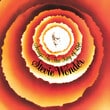
GENESIS The Lamb Lies Down On Broadway (50th Anniversary Edition) Rhino/Warner(2025)

I felt that Peter Gabriel used mime movements better than David Bowie. It was original and unique. He wasn’t trying to do mime properly like David Bowie would during his Ziggy Stardust tour. Genesis was touring the United States a lot at this time, and I went to see many of their concerts. The ones I attended in 1973 and 74 included the following: Felt Forum, NYC on November 22, 1973; Capital Theatre, Passaic NJ, on March 1, 1974; Academy of Music NYC on May 4, 1974, and Academy of Music in NYC on December 6, 1974. I took my camera to the March 1 concert in New Jersey and the December 6 concert at the Academy of Music. No one stopped me from taking photos in those days. I took a photography class at school and had great shots of their concerts. Peter Gabriel flew up in the air like Peter Pan at the end of “Supper’s Ready.”
During the The Lamb Lies Down on Broadway show, I sat in the front row; Peter Gabriel came down to the front of the stage during one of the songs “Anyway,” and stared straight into my camera.
Peter Gabriel was a huge influence on my life and career. He would tell stories using very simple mime techniques that he picked up from watching performers, such as Marcel Marceau and Lindsay Kemp. Unlike David Bowie or Kate Bush, Gabriel never took lessons from Lindsay Kemp. He took from what he saw and liked. In the song “Watcher of the Skies,” he would either stand very still or make sudden, agitated movements. He knew how to use rhythm very well. This wasn’t dance, but something entirely different. It reminded me of movements in silent film classics such as The Cabinet of Dr. Caligari or Nosferatu. He made these movements with great concentration. I often watched him from the center of the front row in the theater. I was deeply affected by his lyrics and his movements like nothing else. This influence remained strong deep inside me for years.
Furthermore, I believe this musical drama is as artistically refined and richly creative as Alban Berg’s Lulu and Debussy’s Pelléas et Mélisande, which I loved as a teenager. Peter Gabriel, who wrote the story and approximately 98% of the lyrics, possessed an extensive knowledge, drawing inspiration from The Tibetan Book of the Dead and Carl Jung’s diaries, as well as Alejandro Jodorowsky’s El Topo. Furthermore, it shows the influence of John Bunyan’s 17th-century religious work The Pilgrim’s Progress, and 19th-century British poets William Wordsworth and John Keats, as well as tales from One Thousand and One Nights, Greek mythology, and Middle Eastern myths. Moreover, it’s an incredibly emotional work to listen to. Some songs are intense, like punk. Yet, there’s also a surrealist influence. In the latter part of the work, you can hear tracks ranging from ambient pieces to songs created entirely through improvisation. The music is richly varied yet cohesive.
The title track, I believe, poetically captures the essence of 1970s New York City like no other song.
The story depicts Rael (an anagram of “real”), a Puerto Rican-American teenager in New York who strays into another dimension. At first, he is enveloped in a warm cocoon, but it soon transforms into a cage, trapping him. Escaping, he encounters many others searching for an exit. As in The Tibetan Book of the Dead, he experiences flashbacks of his own life. Guided by the blind woman Lilith, he reaches one exit.
Walking down a long corridor, he arrives at a pool where Lamias—half-human, half-snake creatures—reside. They caress him, but when they bite him, the Lamia die. The track “The Lamia” is an episode reminiscent of The Arabian Nights, and the music is a masterpiece that feels influenced by Ravel.
Next, upon arriving in town, the residents’ skin is swollen like balloons, and they tell Reel, “You’ve become like us.” This is the result of everyone encountering the Lamia. After undergoing a castration procedure by Doktor Dyper. Rael sees New York City appearing above his head in a window, and he longs to return. He sings his feelings out emotionally, but then he hears the voice of his brother John drowning in the river and rushes to rescue him. However, when he saves him, it turns out he himself was the one drowning.
The song sung at the end, with the lyrics “It is here. It is now," is about ‘individuation’ in Carl Jung’s analytical philosophy—(dreams, active imagination, free association, etc.) into consciousness and assimilating them into the whole personality to achieve the wholeness of the self.
I loved The Lamb Lies Down on Broadway from the moment I heard it. I particularly liked the story and the lyrics. I thought that it was and still is one of the greatest works of art from the 20th century. I completely identified with the character of Rael. I lived in NYC at the time I heard it in 1974. There were a few Puerto Rican kids in my school, and I had a close friend who would carry a spray gun and paint graffiti on the subway. There were Italian gangs in my neighborhood. Some of them would threaten to beat us up just because Puerto Ricans were in our school. The Elgin Theater, where Peter Gabriel may have seen El Topo (which influenced this story), was three blocks from my apartment house. I also saw it there at the time. Friends of my mother who came from Japan, such as Tadanori Yokoo, also saw it there and were impressed by this film.
When my stepfather and mother suddenly separated, while I was visiting relatives in Japan, I couldn’t go back to NYC—even though I was already enrolled in high school. I would listen to The Lamb for hours, feeling that the lyrics represented my life, and I was trapped underground in a country whose culture I couldn’t understand. I felt that The Lamb is my life in art. I am sure people with similar experiences will understand this.
Gabriel worked with Jodorowsky to adapt this work into a film, but was unable to secure sponsorship. In the 21st century, Gabriel wanted to produce a musical, but Tony Banks, who composed most of the music, did not agree with his proposal.
This box set includes remastering by Mike Shawell at Abbey Road Studios, new remixes by Gabriel and Banks, the complete 1975 live recording, and a 60-page booklet. Some of the live versions are even better than the studio recording!
The above article by Ayuo includes excerpts from Ayuo Takahashi’s book Outside Society - People Without a Country
Published August 8, 2025, by Jenny Stanford Publishing.
Distributed worldwide by Taylor & Francis group, which includes CRC Press and Routledge.
Distributed by Maruzen and Kinokuniya in Japan
https://www.routledge.com/Outside-Society-People-Without-a-Country/Takahashi/p/book/9789815129540
https://www.amazon.co.jp/Outside-Society-People-Without-Country/dp/9815129546/