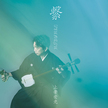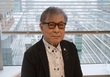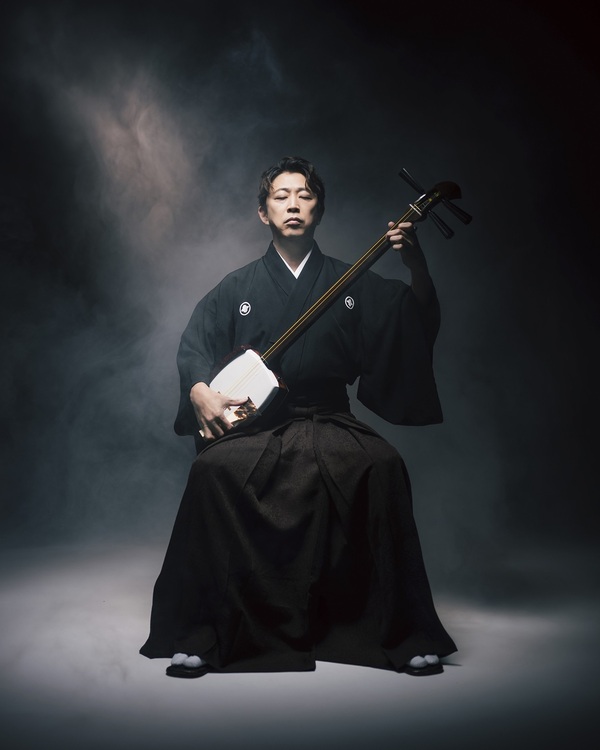
Hiromitsu Agatsuma: Releasing a new album for celebrating his 25th year of solo activity. What is the new world of the shamisen, brought by different relations and connections?
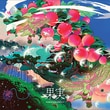
Hiromitsu Agatsuma, a shamisen player, is said to be in 25th year of solo activity. At this turning point, he has released a new album. The title is 繋 - Tsunagu (carry on/connect). What is the message he wants to convey through it?
“Broadly speaking, I have three themes: connecting people (artists) across generations, bridging genres, and bringing the world together. In line with these subjects, I provided new compositions except for the opening track “Etenraku Gensoukyoku” (Etenraku for String Ensemble) and closing track “Tsugaru Jyongara Bushi”.”
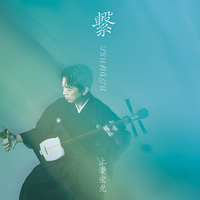

Listening to every eight compositions on the album, you naturally understand how well his above-mentioned messages are laid out in them. For instance, “Etenraku Gensoukyoku”. The title clearly tells where its motif is taken from, and he challenged this version with Leo, a koto player. Traditionally, no one has ever played compositions for Gagaku with shamisen or koto. Here, what he does is to “bridge genres”. And also, playing with Leo means “connecting artists across generations.”
“Belonging to the same traditional Japanese instruments does not necessarily provide a reason to have compositions for koto and shamisen. For one thing, I wanted to arrange this composition to set an opportunity for two particular instruments together. And I invited Leo, who is much younger than I, as a duo partner. Because I had played with him before.”
Three compositions are played with Sho Asano, a Tsugaru shamisen player, and they also share the same spirit of “connecting artists across generations.” Asano is the player who began to stand out and draw attention after Agatsuma.
“He has played with artists from not only Min-yo but also many different genres. Although there is a twenty-year-old gap between us, I recognize him as a shamisen player who shares the same approach as mine, belonging to the same lineage, since I know he has been listening to my albums over the years. So I believe that he is the artist who can appreciate and carry on my experience and touch.”
The “bridging genres” theme comes next. Here, the centerpiece should be “Nippon”, where he invites Eitetsu Hayashi and Eitetsu Fu-Un no Kai (Japanese percussion ensemble).
“I always respect Mr. Eitetsu pretty much. As everybody knows, he is the artist who has introduced O-daiko (Japanese percussion) to the world and developed its potential. I hope that I can carry on his spirit and lifestyle. For this composition, I wrote almost all the phrasing for Taiko, and I didn’t leave it up to him. I know Eitetsu and the members of Fu-Un no Kai have a lot of rich experience performing with orchestra, where they have to play completely written scores, and yet I delivered them specific images, even over open areas of improvisation this time. I have rarely composed music in this way, but I prioritized my plan to have Taiko play major roles. Taking the duo of taiko and shamisen into account, the moment the shamisen plays a melody, the taiko accompanies it in most cases. Thus, the composition gives Taiko the main role, and I fill up the space, or compensate. I wanted to finalize it in that way.”
Another composition with a “bridging genres” theme is “Nikata,” featuring Dai Miyata, a cellist, who has accumulated experience on the duo tour with Agatsuma.
“I was on tour with him. A shamisen is fundamentally a plucked string instrument that produces sound only by a series of points (pizzicato,) whereas a cello can draw out lines as long as you want. I hope you enjoy the space built up by points and lines in this composition. “Nikata” was a composition on the set list of the tour.”
And for the theme “bringing the world together” is “Yugen” composed by Jung Jae-il, a Korean composer known for writing the scores of Squid Game and Parasite.
“I have played with Jung Jae-il before, and to work on something together has been on my mind ever since. This time, I commissioned him a composition. I wanted him to compose for Japanese instruments from a non-Japanese perspective. As a result, enhancing potentials of the shamisen was one of my intentions, too.”
You will see how well Jung Jae-il responds to Agatsuma’s idea by listening the composition. It is not about composition, but producing unimaginable shamisen music, including acoustic effects.