
ヨーロッパ~アメリカ~アジアを往還した、フィリピンの民族音楽学者/作曲家のカセット・テープ作品とピアノ音楽
カセット・テープによるライヴ・パフォーマンス作品《カセット 100》
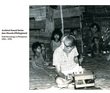
2019年2月に横浜で開催されるTPAM(国際舞台芸術ミーティング in 横浜)、恩田晃ディレクションによる2日間のプログラムで、フィリピンの音楽家ホセ・マセダが取り上げられる。演奏されるのは、100台のカセット・テープレコーダーを使うことで有名な《カセット100》と、ピアノを含む2曲の室内楽作品。ポータブル・カセット・プレイヤーを操るパフォーマンスで知られる恩田が、なぜホセ・マセダに注目するのか? 《カセット100》(1971)は、竹製の楽器の響きや人の声を収録したカセットを100人のプレイヤーが手に持って再生しながら練り歩くという、聴衆参加によるパフォーマンス的作品。ということは、やはりカセット・テープ繋がりか? いや、短絡は止そう。ここで問題にしなければならないのは、「なぜいま、カセットか?」ではなく、「なぜいま、ホセ・マセダか?」なのだ。
恩田がマセダの作品に出会ったのは、2000年にジョン・ゾーンのレーベルからリリースされたCD。アジア、フィリピン的な音楽要素と西洋的なそれとを換骨奪胎させたマセダの手法に強い衝撃を受けたという。恩田は現在N.Y.を拠点としているが、自身でも言うように典型的なコスモポリタンなアーティストであり、音楽の地域性などとは無縁にも見えるのだが、その彼がマセダの汎アジア的なヴィジョンに裏付けられた音楽と思想に興味を惹かれるというのは意外でもあり、それだけに意味深いものを感じる。
昨年生誕100年を迎えたホセ・マセダ
西洋音楽からアジアの民族音楽へ
そもそもホセ・マセダがアジアの土着的音楽要素、更に戦後の欧米アヴァンギャルドの手法と西洋の前衛的な作曲手法に通じていたのはなぜか。彼のダイナミックな経歴を追ってみると、そのヒントを随所に見出だすことができる。
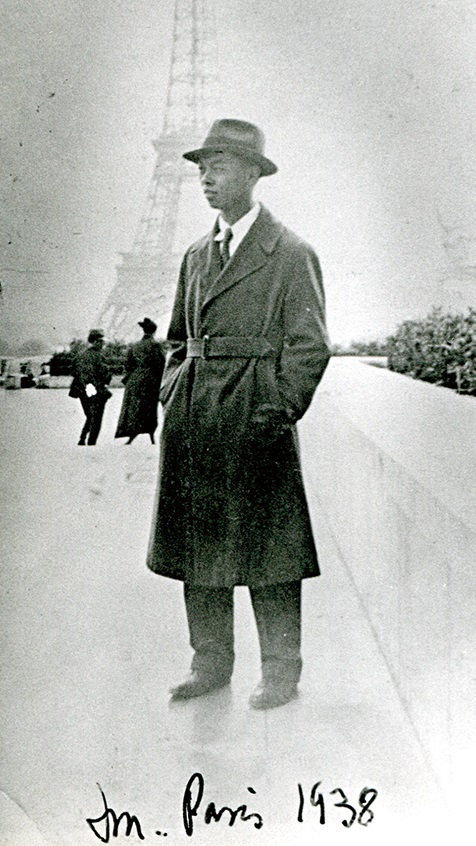
1917年フィリピンのマニラで生まれたマセダは、音楽的に恵まれた環境に育ち、所謂ピアノの神童だったようだ。20代にはパリのエコール・ノルマル音楽院で、あのピアノ音楽の巨匠アルフレッド・コルトーのもとでピアノを学んでいたという。(楽曲分析のクラスは、幾多の大作曲家を輩出したナディア・ブーランジェ。アカデミックな作曲家ばかりでなく、ピアソラ、フィリップ・グラスらを教えた伝説的音楽教師である。)マセダは更にサンフランシスコでフランスのピアノ音楽、特にドビュッシーの巨匠ロバート・シュミッツのもとでピアノの研鑽を積んだ。しかし、その後1950年代にN.Y.のコロンビア大学で民族音楽学を学んだことが転機となり、アジアの民族音楽に目覚める。当時アメリカでは、フォーク~民族音楽研究が盛んになり始めた時期であり、そうした潮流からも刺激を受けたのであろう。フィリピンに戻った後は、フィリピンはもとより、インドネシア、タイ、マレーシア、ヴェトナム、中国、韓国、日本などの辺境域に残るアジア土着の音楽文化の研究に没頭した。専ら民族音楽学者として1950年代を過ごしたマセダだが、1958年にはミュージック・コンクレートで有名なフランス国営ラジオの「音楽探求グループ」に接触、またシュトックハウゼンやクセナキスらのヨーロッパの前衛作曲家たちの活動にも触れていたようだ。作曲を始めたのは1960年代、彼が40代になってからというが、彼の音楽遍歴を辿るとまったく目が眩む思いがする。1917年生まれなので、昨年がちょうど生誕100年だったのだが、日本では大きくとりあげられることがなかったのは非常に残念だ。
高橋アキが語るマセダのピアノ
今回、2日目に演奏されるのは《5台のピアノのための音楽》(1993)と《2台のピアノと4本の管楽器のための音楽》(1995)という室内楽作品。いずれも現代作品を得意とすることで知られるピアニスト、高橋アキのために書かれた、マセダの作品の中でも異彩を放つ作品である。この曲の作曲経緯については、先日高橋アキさんへのインタヴューの中で興味深いエピソードを聞くことができた。
高橋アキさんがマセダに最初に出会ったのは、1979年ソウルで開かれたアジア音楽祭でのこと。その後、幾度か顔を会わせることになり、ある時、東京で武満徹・企画のコンサート『Music Today』のロビーでの立ち話の最中に、この“民族音楽学者にして作曲家”にごく軽く「ピアノ曲もあるの?」と訊いてみたところ、「あんなオールドファッションな楽器のために作曲なぞするものか!」という答えが返ってきたという。このけんもほろろなマセダの答えは、彼流の諧謔だったのかもしれない。だが、アジアの土着音楽に目覚め民族音楽学者となり、作曲家としてもアジアの楽器を用いたり、西洋音楽の平均律に反するような作品を書いていたマセダにとって、こと「ピアノ」に関しては何か葛藤めいたものがあったのではないだろうか。アキさんの「ピアノの曲も作曲するの?」という問いは、マセダにとっては、自らに課されねばならない「問い」であり、いつかは答えなければならない「問い」だったのではないか。後年親しく交流したアキさんによれば、「マセダはフィリピンの自宅でも暇さえあればいつもピアノに触れていた」というが、やはり彼にとってピアノは最後まで「自分の楽器」だったのだ。(アキさんは、後にフィリピンのマセダの自宅に10日間ほど滞在し、コルトー~シュミッツ仕込みの高度なピアノ・テクニックの伝授を受け、自身の奏法を大いに見直させられることになったという。)そしてついに70代後半にしてマセダが書いたピアノ曲がこの2曲なのである。
今回演奏される2つのピアノ曲について
今回演奏される2曲は、「5台ピアノ」と、「2台ピアノと4本の管楽器」という特殊な編成によっている。マセダのオーケストラ作品同様に、ここでも音響の空間性は重要な要素となっている。まるでオーケストラのチューニングを思わせる「ラ音」のオクターヴの呼び交わしで開始する《5台のピアノのための音楽》は、随所にミニマル風の反復音型が配されており、非常に明晰な響きを持っている。だが、それらが組み合わされると、幾何学的にさえ見える楽譜の印象とは異なり、伸縮するようなエコーや、うねるような有機的な躍動感が生まれる。ちょうど池を眺めている時にひょっこりとあちこちから魚が顔を出したり、目の前の水面をよぎったりする感じといったらよいだろうか。中ほどにさしかかると東洋のペンタトニックを思わせるパターンも現れるが、エキゾティシズムに陥ることはない。アキさんによると、かすかにフランス的なピアニズムも感じられるという。たしかに、散りばめられた半音階的なアルペジオなど、ドビュッシー風の指の動きのイメージもあるようだ。そして曲の最後の部分に単音の連打によるオスティナ―トに収斂する力強さが、マセダの自信作であることを窺わせる。
《2台ピアノと4本の管楽器のための音楽》の方は、当然だが音色的に、もう少しカラフルな印象の作品。今回、インタヴューに際して、アキさんに手書き譜の大判ファクシミリを見せていただくことができたが、細かな音型にマセダ本人の指示によるクレッシェンド記号などが随所に追加され、厳格な中にも豊かな表情付けがなされていることが印象的であった。
マセダの著書では、そのタイトルの通り「ドローンとメロディ」が彼の音楽思想の根本として説明されているが、これらの曲を聴くと、それが低声部の「ドローン」の上に「メロディ」が乗る、というような単純なものではないことがよく判る。彼の「ドローン」はもっと音色や遠近感に関わる3次元的な概念であり、「メロディ」も単に旋律を指すのではなく、アンサンブルによって生み出される集団的要素や、ひいてはそこから浮かび上がる「アジアの音の原風景」のようなものを指しているのではないだろうか。
今回、5台のピアノがステージに並ぶだけでも壮観だが、ピアノにはマセダとは1960年代から交流が深く、マセダの著書『ドローンとメロディ』の訳者でもある高橋悠治も加わり、貴重かつ最高のステージになるだろう。
【訂正とお詫び】
12/10発行号intoxicate vol.137 P.08にて、ナディア・ブーランジェがキース・ジャレットを教えたという記述がありますが、実際に直接教えたという事実は確認できませんでした。訂正してお詫び申し上げます。今後このようなことがないよう、今まで以上に気を付けてまいります。
ホセ・マセダ (José Maceda)【1917 – 2004】
マニラ生まれ。1937−41年にパリのエコールノルマル音楽院で学び、卓越した技術を誇るピアノ奏者として頭角を表す。その後、1953年からはフィリピンのみならず東南アジアと東アジアでの民族音楽に関する詳細な調査を行い、50歳近くになってから作曲活動を開始。100台のカセット、20のラジオ局、果ては屋外での数千人の参加者のための儀式的なパフォーマンスなどフィリピンのみならず東南アジア全域の民族音楽のフィールドワークと西洋の前衛音楽を組み合わせた特異な作曲作品群を残す。半世紀以上に渡る活動は、フィールド・レコーディングの音源や解説、作曲作品の楽譜など、膨大な量の記録資料としてマニラのフィリピン大学の民族音楽学研究所に所蔵されている。著書に『ドローンとメロディー: 東南アジアの音楽思想』高橋悠治編・訳(1989)等。
寄稿者プロフィール
五十嵐玄(Gen Igarashi)
長年アートショップに勤務し、現代音楽・民族音楽のLP・CDの輸入・販売、現代音楽のコンサートやレクチャーを手掛ける。並行し、雑誌「ユリイカ」をはじめ、雑誌・CDライナー等の執筆多数。
LIVE INFORMATION
『TPAM(ティーパム) – 国際舞台芸術ミーティング in 横浜 2019』
2019年2/9(土)~17(日) https://www.tpam.or.jp
 José Maceda, Cassettes 100, 1971, Photo by Nathaniel Gutierrez, Courtesy of UP Center for Ethnomusicology and Ringo Bunoan
○2/10(日)18:30 / 19:30(各回約30分)
ホセ・マセダ『カセット100』(1971)
ディレクション:恩田晃
振付・演出:東野祥子、カジワラトシオ(ANTIBODIES Collective)
会場:KAAT神奈川芸術劇場 アトリウム
詳細はTPAM2019ウェブサイトをご参照ください。

○2/11(月) 18:00(上演時間約70分)
ホセ・マセダ 『5台のピアノのための音楽』(1993)
演奏:高橋アキ/高橋悠治/寺嶋陸也/入川舜/佐藤祐介(p)
ホセ・マセダ 『2台のピアノと4本の管楽器』(1996)
演奏:高橋アキ/高橋悠治(p)田中香織(cl)笹崎雅通(Bon)有馬純晴(hr)村田厚(tb)
指揮:ジョセフィーノ・チノ・トレド(両曲共)
ディレクション:恩田晃
会場:KAAT神奈川芸術劇場 ホール
José Maceda
Works for cassette players, and piano, by Filipino Ethnomusicologist / Composer - a man with an interdisciplinary soul, traveling back and forth between Europe, States, and Asia.
Text: Gen Igarashi
〈Cassette 100〉 - a composition for live performance by cassette players
TPAM – The Performing Arts Meeting in Yokohama scheduled in Feb of 2019 features 2-day concerts of José Maceda, a Filipino composer, under the curation of Aki Onda, a festival director. 〈Cassette 100〉, a composition, curiously known by the performance with 100 portable cassette players, and 2 other compositions for chamber ensemble with pianos are on the program (as titled “Re-staging José Maceda”). But how has José Maceda come into Onda’s artistic sight, who is also recognized by his performance using the cassette Walkman? Maceda’s 〈Cassette 100〉 (1971), is the work involved 100 participants carrying cassette players playing the prerecorded sound of bamboo instruments, and human voices. Is this a cassette player connection? No. That would be too simplistic. The proper question must be not “Why now Cassette Player?” but” Why now José Maceda ?”
It was through a CD, released from the label owned and produced by John Zone that Onda first encountered the music of Maceda. He said the idea of Maceda’s music, deconstructing the elements both from the music of Asia and Philippines and those from West, blew his mind. Considering Onda’s own current activities based in NY as a rootless cosmopolitan, by his own definition, he seems to be detached from the idea of an ecosystem of local music. Therefore, it is unexpected, and all the more meaningful, for an artist like him to be attracted by Maceda ’s music and philosophy rooted deeply in Pan-Asian music.
The shift from a musician of West to a musicologist of Asia, and the 100th anniversary year of Jose Mceda.
First off, how could he possibly be versed in Asian vernacular music elements plus the composition method of the post-war avant-garde of the States and Europe? Tracing his dynamic life history gives us many clues to this question.
It is said that he was born in 1917 in Manila Philippines and raised in a musical environment, where he was recognized as a piano prodigy. And in his twenties, he started studying piano under the maestro, Alfred Cortot at École Normale de Musique de Paris (where music analysis was taught by legendary Nadia Boulanger, who influenced many great composers such as Philip Glass and Astor Piazzolla. Maceda also studied briefly in her class.) Maceda continued to study French piano music in San Francisco under E. Robert Schmitz, a prominent pianist known for his interpretation of Debussy. But studying ethnomusicology at Columbia University N.Y. in the 1950s opened his eyes to Asian musicology and brought him to a turning point. Around that time in the States, researches in the field of local folk and ethnic music had just begun to thrive, and he was apparently involved in that movement. Coming back to Philippines, he devoted himself to the research of indigenous music and cultures that survived in fringe areas of Indonesia, Thailand, Malaysia, Vietnam, China, Korea, and Japan. While Maceda spent his time mostly as an ethnomusicologist in the 1950s, he contacted with 〈Groupe de Recherches Musicales〉 at Radio France (RTF - Radiodiffusion-Télévision Française) known for the works of musique concrete. It was in the 1960s, in his forties, when he started composing. It is dazzling and mesmerizing to me to just briefly review his life. Born in 1917, Maceda had the 100th anniversary of his birth last year, and what a pity it was that there was no homage paid to his music in Japan.
A memory over the piano, or piano music of Maceda, by Aki Takahashi
The program on the second day of the 2-day concerts shows that we are to listen to 2 pieces composed for chamber ensemble. One is 《Music for Five Pianos》(1993), and another is 《Music for Two Pianos and Four Winds》(1995). These 2 pieces, which are distinctive among Maceda’s compositions, were composed for Aki Takahashi, a prominent pianist and exponent of contemporary music. Recently I was able to do an interview with Aki Takahashi and heard an interesting episode about the birth of these 2 compositions:
It was a 1979 music festival in Seoul, organized by ACL (Asian Composers League), when she first met Maceda. Since that concert, she had several occasions to see him in person. At one time, while chatting with him in a concert entitled 〈Music Today〉 directed by Toru Takemitsu, she cast a simple question to this ethnomusicologist and composer: “Do you compose for piano?” “I have no wish whatsoever to compose for such an old-fashioned instrument,” Maceda replied in a flat manner. This bluntness of Maceda’s answer could have been a wit all his own. However, when I learn that he became an ethnomusicologist through his discovery of Asian vernacular music and that his compositions often employed traditional Asian instruments and also that he was writing music almost against the so-called European well-tempered music, it is not odd to say that Maceda must have conflicting ideas about the instrument “Piano”. Aki’s question; “do you compose for piano?” could have been the one that Maceda must ask himself, to which he had to find an answer sooner or later. In his later years, Aki became his close friend and recalled: “Maceda always found himself touching the piano in his spare time.” His instrument was always a piano.
Around the “Music for Pianos”
2 pieces on the program of the second day respectively and uniquely consist of “5 Pianos” and “Two Pianos and Four Winds” A sense of sound space also plays an important role here as in Maceda’s. orchestral works. 《Music for Five Pianos》 starts with the pitch of “A” alternately repeated in different octaves in a call-and-response manner, reminding the listeners of the tuning of the orchestra, and then goes to minimalistic repetitive figures, which are strewn throughout the piece, giving it a great clarity of sound. Once all these elements are mixed, the sound evokes elastic echoes and swaying organic grooves on the contrary to its geometrical look on the score. As if you are staring on the surface of the pond and catch unexpected fish heads popping up here and ther, or catch a sudden passing of fish in front of you. In the middle section, some patterns like an oriental pentatonic scale appear, but it never falls into tawdry exoticism. According to Aki, one could feel subtle scent of French pianism there. Certainly, scattered chromatic arpeggios may have traces of some finger movements of Debussy’s piano music. And we would know at the very end of the piece that Maceda was very confident of this work as the strong single-note hammering culminates into an ostinato.
The other piece 《Two Pianos and Four Winds》 obviously gives a more colorful sonic impression due to its instrumentation. Aki allowed me to look into the enlarged facsimile of its handwritten score at the interview. It was impressive for me to find so many additional instructions by him, such as crescendo even on smaller figures.
In his book “Drone and Melody”, the basics of his philosophy in music are illustrated as indicated in the title, however listening to these pieces proves that they are not as simple as the “melodies” on the “drones” in the low voice.
As a “drone” in his music is a 3-dimensional concept that has to do with timbre and perspective, his “melody” must refer to not just a lyric line of notes, but to a collective consequence or even an “Asian primal soundscape” brought forth by an ensemble.
Five pianos on stage will present a grand spectacle. And Yuji Takahashi, Maceda’s close collaborator since the 1960s and translator of the book 「Drone and Melody」, will join the ensemble. I am sure the concert will be one of the best and indeed a precious one.
Interpreted by Kazuki Takami(intoxicate)