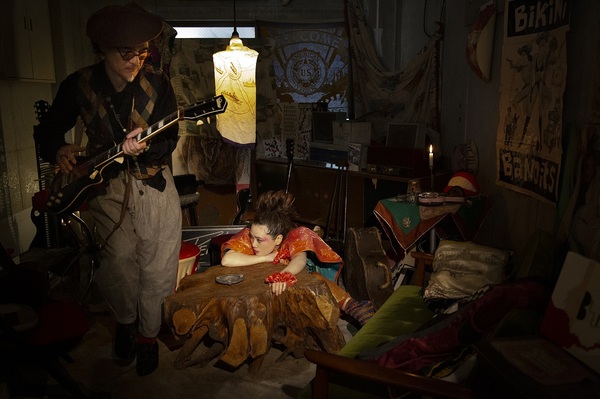
2016年の結成20周年を経て、EGO-WRAPPIN'から久しぶりに届けられる通算9枚目のアルバム『Dream Baby Dream』は、不思議な作品だ。真っ暗闇のようでいて、昼下がりのひと時のようでもある。古き良き時代も感じさせるし、最先端の音楽でもある。EGO-WRAPPIN'らしさは多分に含まれているのに、どこにもない音楽が成立している。
森雅樹(ギター)いわく、要は〈いろんなものをミックスさせるおもしろさ〉なのだと言う。そんな〈混じり合いの妙〉から生まれたEGO-WRAPPIN'の最新形について、森と中納良恵(ヴォーカル)に話を訊いた。 *Mikiki編集部

〈裏切ってやろう〉ではなく〈おもしろいでしょ?〉
――前作(『steal a person's heart』)から6年も経っていたとはちょっとビックリです。
中納良恵「そうやったんです」
――ベスト・アルバム(『ROUTE 20 HIT THE ROAD』)やシングル(『BRIGHT TIME』)があったのでブランクは感じませんでしたが。今作の印象は、前作を聴いたときにも感じたことだけど、中納さんの歌がど真ん中にドンと据えられている作品だなと。
中納「あんまり音数を増やさないように心がけた気がする。そんな重ねることはしなかったというか。そんなこともない?」
森雅樹「一発で行きたいのもあったし、曲によりけりやったかな。よっちゃんはわりかし重ねたい派やったと思うんですよ。僕はどっちかというとひとつのサウンドで世界を作っていきたい派で。で、いろいろ試したりしたんですけど、結局シンプルな形に戻ったりして。化粧はしてもいいけど、やっぱり重ねたくはない、みたいな」
――そういう紆余曲折のプロセスってこれまでと比べて多かったほうですか? 少なかったほう?
森「いままでは一発でムードが作れるような曲が多かったと思うんです。ロック・ステディな風味でいってみようとか、ちょっとキャバレーっぽい雰囲気でやってみようとか。そこで大事になってくるのは、カッコいい空気感をしっかり封じ込めること。そういう録音が好きなんです。ただ、よっちゃんが聴いている音楽って、ハーモニーなども含めて音を積んでいくように構築されたものが多いのかな」
――エキゾティックな“Arab no Yuki”やめっぽうポップな“oh boy, oh girl”など曲調はヴァラエティーに富んでいて、曲ごとに色合いがガラリと変化する感じはいままで以上に特徴的で。なんでもありだぞ、といったEGO-WRAPPIN'の強みを感じます。
森「それが理想ですね。それが味になって聴こえたらいいなと思ってますね」
――そういうのって、よく〈聴き手の予想を裏切る〉って言われがちじゃないですか。そういった意識って少しはあったりします?
森「裏切ってやろうというのはなくて、おもしろいでしょ?って感じかな。このリズムにこのギターが入ってくるのっておもしろいなぁ、とか。音の混じり方のおもしろさが伝わればいいなと思ってますね。そもそも僕自身がそういう聴き方をするタイプなので。まぁ、あと世界は広いで、っていうことは伝えたいかな」
――(笑)。
森「痛感することがよくありますよ。いまだにレコードを聴いて、こんな世界があったんや!って驚いてますもん」
――なるほど。もともと好きな世界とまったく違った未知な世界をくっつけて新しいサウンドを作る喜びを感じながらレコーディングが進んでいったと。
森「そういう部分は趣味と仕事がごっちゃになってますね。普段はブルースとかロック・ステディとかムードのある音楽ばっかり聴いてるんですけど、趣味の部分をなるだけ仕事のほうに持っていったらあかん、とは考えますけどね。ジャンルを感じさせないオリジナリティーのある音楽を作るのが理想というか、定義づけされやすい音楽はあまり作りたくないので。今回もそういう意識が働いていたかもしれませんね」
「それでもやっぱりEGO-WRAPPIN'に頼みたい、って思ってくれたのだから、やろうと」
――“CAPTURE”は、アニメ「歌舞伎町シャーロック」(2019年10月放送開始)のオープニング・テーマに使われるんですね。(吉村愛)監督からじきじきにオファーがあったそうで。どういう注文内容だったんですか?
森「特にこれっていうのはなかったけど、もう探偵モノはかなり慣れてるから(笑)」
――ハハハ。お手のものだと。
森「考えてみると、頼む側も頼みづらいんちゃうかな、と思うんですよ。制作会議で誰に主題歌を頼むかって話のときに、EGO-WRAPPIN'って案が出たとして、ベタやなって言われる可能性が高いやないですか。それでもやっぱりEGO-WRAPPIN'に頼みたい、って思ってくれたのだから、やろうと」
――アニメの舞台である新宿歌舞伎町っていう街の雰囲気を描いてもらうにはやっぱりEGO-WRAPPIN'しかないだろうということだったんでしょうね。
中納「全然新宿感ないんですけどね(笑)」
森「そういう世界は楽しんで作れるんで、こういう仕事好きなんです。そのなかで今回はちょっとひねくれてやろうと考えたりして、ホーンの混じり具合を妖しくしてみたりだとか。サン・ラーがやるようなスタンダード・ジャズの感じとか、ああいう妖しさをめざしましたね」
――エキゾティックで、スぺイシーな感じってことですか。つまり、EGO-WRAPPIN'の代名詞的なサウンドを鳴らしつつも、マイナー・チェンジすることを楽しみながらやってたわけですね。
森「求められているものを感じつつも、秘かな楽しみも入れて」
――プロフェッショナルな部分もしっかりアピールしていると(笑)。そして、アルバムは後半に進んでいくと、内省的な手触りの曲が顔を出しはじめますよね。
森「なんていうか、今回は派手にしようとか、あまり大袈裟なことはしなかった気がしますね。歌もあまりライヴ感を重視する感じの曲じゃないから、録ったものを聴いて判断していくというか。感情に任せて歌うような、〈よっしゃ、行ったれ~〉みたいな曲が少なかったような気がします」
中納「確かにそれは心がけていたことで、わりと考えながら歌っていたところはありました。とにかく音に合った歌い方をしたということですね。自分の歌を客観的に捉えながら歌うというか、そういう作業が多かったような気がしますね」
森「録ったものを聴きながら判断していく形だったから、もうちょっと突っ込んだ歌い方でも大丈夫だとか、解決の糸口が簡単に見つかることもありましたね。そういうのはこういう方法ならではのことやったかなと思う」
中納「歌がまずありき、というよりは、音といっしょに歌も引き出していく作業が多くて、音に合わせて付けた歌詞もあった。自分の考えていたことを音に擦り合わせていくようにして歌詞を書くというか」
――へぇ~、なるほど。
中納「とにかく歌って聴いて、歌って聴いて、って作業の繰り返し。押し引きのバランスも念頭に置きながら。ニュアンスを伝えるのが難しいんですけど」
森「馴染ませ方を大事にしたってことやな」
中納「うん、馴染ませ方」
――苦労は比較的多かったんですか?
中納「そうですね、ときどき人の曲を歌っているように感じたこともあったし。“L'amant”とかそうだったかな。バンドで合わせてたときには馴染んでたのに、レコーディングになると自分の歌が浮いているというか、音と分離しているように聴こえてしまって。馴染ませるのに時間がかかりましたね」
――ビートリッシュなフォーク・ロック・チューン“L'amant”はアルバムのなかでもとびきり軽快な曲ですよね。
中納「だから自分の持ち味とはまた違う歌い方というか、曲の世界に合った歌い方を求めたので、なるべく感情を抑え気味にするように心がけました」
要素の交わり具合で曲のおもしろさが引き立つような音楽
――先ほど森さんが大袈裟なことはしないよう心がけた、というのは何か理由があってのことですか?
森「自分がそういう聴き方を求めていたところがあったんですよね。シャキシャキした感じの音楽じゃないほうがいい、って気持ちにはなってたかな。ま、そもそもシャキシャキなんてできへんのやけど(笑)、自然体といえばそう言えなくもなかったかなと思う」
――その結果、いい意味で掴みどころのない、不思議な色合いの作品が出来上がってしまったというのもいいですよね。
森「ま、そういう作品があってもいいじゃないですか(笑)」
――中納さんは曲作りにおいてはどんな意識が強くありました?
中納「ポップに聴かせられたらいいな、というのがありましたね。歌詞もメロディーも歌も。でも、冷静だったわけでもなくて、感情の揺れはあったほうがいいなと思っていました。“timeless tree”や“on this bridge”とかそういう気持ちが働いていたと思う」
――とにかくリズムも多彩ですからね。作る上で難しかったのは?
森「“oh boy, oh girl”ですかね。曲の構成として、一度はみ出して、また元に戻るのが難しい曲なんで。ちょっと違う世界に入っていく展開があるんですよ。逆回転のギターが出てきて、サイケというか、ちょっとなんかXTCみたいな……」
――ひねくれポップ的な世界?
森「そうそう、そういう感じを出すのが難しかった。それから“timeless tree”にも大きな場面展開があるんですが、プログレとまではいかないけど、そういう耳でも捉えられるような曲にできたらいいなとイメージしてましたね。ある人からもそう言われて、やっぱそう感じるんや、と思った」
中納「展開好きやもんな(笑)。展開好きな人間がワン・グルーヴをめざす、みたいな」
――ひねくれてるなあ(笑)。
中納「展開したいところをグッと我慢して、ワン・グルーヴで押しとおす。そんなんちゃう?」
森「うん、あるところもあるな」
中納「あるところもあるんです」
――(笑)。昔よりも、もっといろんな要素を入れ込みたい、もっと多彩な世界を描きたい、というような野心が働いたりしませんか?
森「そもそも多彩なことができないんですけど、昔はもっとたくさん憧れの世界があって、例えばドゥワップやスウィングなどのようなスタイルを真似してみたいって考えが強かったんですが、近年はそれが無くなっている。あとバンドも、スカを熟知している人を集めたオールスター・チームを作りたい、みたいな考えはまったくなくて、それよりも知らん人と演奏したほうが楽しくなってきた。いまはイアン・デューリー&ザ・ブロックヘッズとかジョナサン・リッチマンとモダン・ラヴァーズみたいなロック・バンドを聴いているほうがおもしろい発見がけっこうある。そういう聴こえ方をする音楽を作りたいんですよ」
――多彩な要素が混じり合った雑味のある音楽。
森「うん。要素の交わり具合で曲のおもしろさが引き立つような。あんまりディープな専門分野の音楽になることを避けたいんですよ。でも深く聴き込めば、スカとかスウィングとかのルーツが見えてきて、新しい発見ができる。そういう聴かれ方が理想ですよね」
自分という惑星を爆発させることをなによりもいちばんに考えてる
――いまもEGO-WRAPPIN'を入り口として過去への扉を開いているリスナーって多いですよね。
森「ミュゼットの曲や、ルイ・ジョーダンの曲を聴いたり、あるいはニューウェイヴの頃のスティッフ・レーベルのミュージシャンを知ったりだとか。そういう世界の入り口になれる音楽をめざしてますね。やっぱミックスですよ。僕らの世代はミクスチャーって重要なコンセプトだったりするので」
――いまやEGO-WRAPPIN'というと間口が広すぎて、イメージも人それぞれ、世代によってもさまざまに違ってきていますよね。ダンス・ミュージック好きやルーツ・ミュージック好きなど幅広い層に支持されていて、カテゴライズするのがとにかく困難。たぶん今回のアルバムも多様な受け止められ方をするだろうと想像します。中納さんは曲作りの面で、いまでもいろんな音楽から影響を受けたりします?
中納「昔に比べたら、こういう曲作りたい、みたいなことは考えなくなりましたね。ただライヴ前に、気分をアゲるためにイアン・デューリーやスリッツのライヴを観たりすることはありますけど」
森「自分を鼓舞するためにね」
中納「いまはもう音楽の面においては、自分のことを信じようと思う。やっぱりここまで培ってきたものがあるし、いろんな人とセッションしてさまざまな音楽を作ってきたという自負もあるし、内面に湧き上がってきたものを信じよう、って思ってますね。だから外にアンテナを立てるよりも、内側のアンテナを働かせることが大事。それにみんなそれぞれ違って当たり前やし、自分にしかできないことってあるから。自分という惑星を爆発させることをなによりもいちばんに考えてる」
――おお、カッコいいですね。
中納「ライヴ前にいつも思い浮かべるイメージがあって、自分は星なんです。そしてお客さんも星なんです。そして、みんなそれぞれが宇宙のなかで同じ時間に光り合う。人と自分は違う、と認識しながらも、誰とでも光り合うことができる。そう考えていると、なんか気分が高揚してくるんです」
――音楽はいつどのタイミングで完成し、目的地に着陸するかわからないものですからね。
中納「そうなんですよね、終わり方なんですよね……。留め方というか、それはもうセンスの問題ですよ。理想としては、何か引っかかる音楽であってほしいなって思いますね。なんかようわからん、という受け止め方でもいいから」
――モヤモヤさせるものであってもいい。
中納「うん。なんか雰囲気モノっていうのがいちばんおもしろくない。邪魔しない音楽っていうのも時と場合によってはいいと思うんですけどね。でも願わくば、ちょっとでも感情が揺れてもらえるものでありたい。そっちのほうが人間らしくておもしろいから。〈お、こう来たか!〉〈それってイイの?〉みたいになってしまう音楽。下手くそでもなんでもいい。それは肌触りとか声質とか、カッコいいと思えるものは共通してますね」
――音楽に求めるものとして〈刺激〉って大きな比重を占めている?
中納「刺激と、安らぎですね」
――真逆ですけどね、そのふたつは(笑)。
中納「確かに真逆ですね(笑)」
――両方を兼ね備えているほうがいい?
中納「いい音楽は兼ね備えている気がしますね。夜、部屋を暗くして、モロッコのギターと歌だけの音楽を聴いていると、すごく安らかさを感じるんですけど、安らぎだけかというと、ちょっとワクワクしている自分もいたりして」
――未知の世界に引っ張り込まれていくようなワクワク感?
中納「そうそう。旅をしているような、どこかに連れ立って行ってもらっているような気持ちになれる」
――では森さんが音楽に求めるものって?
森「う~ん……自分にないものを見せてくれることかな。こないだ、じゃがたらのライヴを観たんですけど、いまめっちゃハマってるんですよ。メッセージ・ソングなんですけど、みんなで拳を振り上げてサビを歌うみたいなのがカッコいいんです」
――そういう部分って自分にはもともとないものだと。
森「あんまないんですよね。でもデタミネーションズを観たときにも共通するものを感じたな。自分のなかにはないけど、揺り動かされることはよくある。ムチャクチャ純粋なんですよ、僕。〈感動しい〉やし」
――(笑)。
森「そういうものを求めてしまうことがあるかな。そう、パッションですよ」
――おふたりの音楽にもけっこうパッションを感じてるんですけどね、こちら側としては。
森「よっちゃんはバーンと出せるもんな」
中納「そうですね、ドーンと出せますね」
――ま、そのふたりのコントラストというか、絶妙なバランスがおもしろいわけでね。では最後に、新作を作り上げたことで得た手ごたえをお聞かせ願えますか。
中納「そうですねえ。個人的には、次はもっとスカスカなアルバムを作りたいなって思ってますね」
――スカスカ?
中納「そうそう、スカスカな音楽作りたい」
――それはつまりもっとシンプルで、余白がたっぷりな音楽をめざすってことですか?
中納「一音一音が際立つというか。やるとなればもちろんピシッと建設的な作業を行うだろうし、ダルっとした音楽にはならないと思う。いまの気持ちだから、実際そうなるかはわからないですよ」
――今回の作品が密度の高いギュッと詰まった内容になったことへの反動じゃなくって?
中納「そういうことでもないですね。今回のアルバムから、そういうこともできそうな予感をもらったんですよ。最近、音圧でナンボみたいな、波形がずっとピークみたいな音楽って聴けないんですよね」
――そういうのが届けられたら、ちょっと嬉しいかも。森さんの手ごたえは?
森「音楽ってつくづく〈混じり合い〉やな、って思った。リズムがどんなに緩くても、混じり合いがうまくいってたらええんちゃうか、って思えるっていうか。高い技術を持っている人にやってもらえばいいわけではなくて、自分で思い描いた音だったらどんな演奏でもいい混じり方をするんです。自由にやっているけどいい混じり合いをしている、そういう音楽が好きなんやなとつくづく感じましたね。今回のアルバムはそこのところを聴いてもらいたいなと」
――確かに今回の混じり合いぶりには自由度があって、誤解でもなんでもいいからいろんなものを大胆にミックスさせてみようというおもしろさが際立ってますね。それが魅力的ないかがわしさを生み出していて素晴らしいと思います。最後に、タイトル『Dream Baby Dream』の命名理由を教えてください。
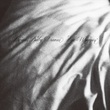
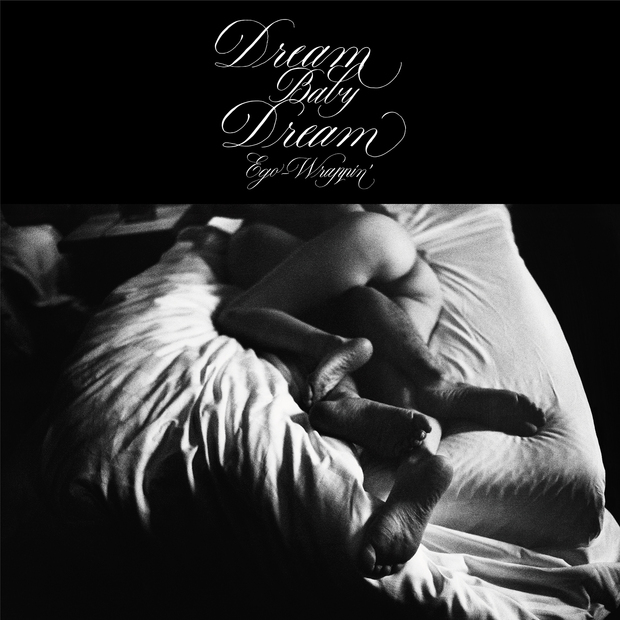
森「ジャケット写真から連想した言葉ですね。写真でひと言じゃないですけど、そこから導き出したものです。そしたらスタッフみんなが〈いいねぇ〉〈似合ってる〉って言ってくれて。たぶんポップやったんでしょう。あと、スーサイドの曲を思い出しますよね」
――はい、パッと思い浮かべたのはやっぱりスーサイドでした。
森「〈うわっ、Dreamって2回言うてる! かっこええ!〉って以前から思っていて。そういえば、スーサイドってバンドのサウンドもスカスカですよね。彼らはオーラで音楽やってますやん」
――あのふたりの人間力には何人も敵わないところがある。
森「ロックンロールやし。あれは理想っすね、うん」
EGO-WRAPPN’ Dream Baby Dream
The newest form of EGO-WRAPPIN’ was born out of “the art of blending”
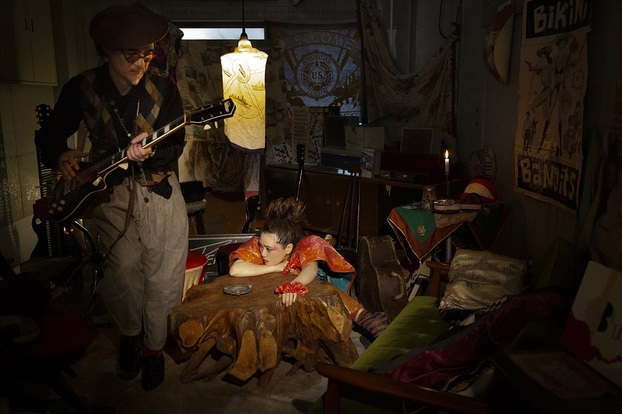
After celebrating their 20th anniversary in 2016, EGO-WRAPPIN’ delivers their 9th album, Dream Baby Dream for the first time in a while- and it is a curious piece.
It is like complete darkness and a sunny afternoon simultaneously. It gives you the old school vibe but sounds new age-y. The music is filled with EGO-WARPPIN’ signatures but you can’t put your finger on any of it.
Masaki Mori (guitar) tells us, simply put, it’s “the fun of mixing different things together”. We sat down with Mori and Yoshie Nakano (vocal) on the newest form of EGO-WRAPPIN’ that was born out of “the art of blending” *Mikiki Editorial Desk
I’m not trying to break their expectations, it’s more like, “Hey, isn’t this cool?”
-It’s a bit surprising that it has been 6 years since your last album steal a person’s heart.
Nakano: Sure has been.
-Although, it didn’t feel that long since the greatest hits album ROUTE 20 HIT THE ROAD, and the single BRIGHT TIME was released. My impression for this new album was similar to what I felt hearing your previous work, that this is a piece in which Nakano-san’s vocal is anchoring in the dead center like, boom.
Nakano: I think we tried not to add too many sounds. Or should I say we didn’t layer too much. Or did we?
Mori: There were ones that I wanted to record in single takes, so I guess it depended on the piece. I think Yocchan (Nakano) was in the school of layering more sounds. I prefer creating a world using a single sound. So we tried different things, but in the end we sort of came back to a simple style. Like we can put makeup on them but really didn’t want to layer.
-Comparing to past experience, did you have more trial and error in this particular process? Or less?
Mori: I think up until now, we had a lot of songs that we could set up a mood in one shot. Like, “Let’s go with rocksteady”, or “Why don’t we give it a cabaret feel”. The most important thing there is properly capturing the cool in the music. That’s the kind of recording that I like. However I’m guessing a lot of the music Yocchan listens to is structured by layering sounds and harmonies.
-It’s more distinctive than ever how each song is completely different from another, such as exotic Arabu no Yuki or super poppy oh boy, oh girl. You are showing off the strength of EGO-WRAPPIN’ like, “Look, anything can happen.”
Mori: That’s my goal. I’m hoping for that to turn into a flavor and be able to hear it in our sound.
-That sort of thing can often be perceived as “(they are trying to) shock the audience”. Are you, at least a little bit, consciously trying to break the audience’s expectation perhaps?
Mori: I’m not trying to break their expectations, it’s more like, “Hey, isn’t this cool?” Like, “This guitar coming into this rhythm is interesting” etc. I’m hoping to be able to show the fun of mixing up different sounds. Since I am a type of person who listens to music like that. I want to show people how big and wide the world is, I guess.
-[Laughs]
Mori: I come to that realization often. To this day, as I listen to a record, I get shocked and I’m like, “I never knew THIS world existed!”
-I see. So you’re saying, as you put together the world you always loved, and unknown worlds, and feeling the joy from this, the recording process kept moving forward.
Mori: That is the part where my hobby and my work get mish-mashed. Usually I’m only listening to music with moods, like rocksteady or blues. Though I do think to myself I should try not to bring my hobby over to my work. I would say making creative music that doesn’t scream a genre is my goal. I don’t want to make music that is too easily defined. I might have been unconsciously thinking that this time.
Nevertheless she wanted to hire EGO-WRAPPIN’, so we decided to accept her offer.
-CAPTURE will be the opening theme for the cartoon, Kabukicho Sherlok (air date: October 2019). I heard that the director (Ai Yoshimura) directly offered you this job. What was her ask?
Mori: Nothing special, since I am so used to working on detective shows. [Laughs]
(EGO-WRAPPIN’ contributed theme songs to a few detective shows on TV.)
-[Laughs] You are a pro at this now.
Mori: When you think about it, it must be awkward to ask us. When they are discussing who to hire for the theme song at the production meeting, let’s say EGO-WRAPPIN’ came up, there’d be a big chance someone will say it’s cheesy. Nevertheless she wanted to hire EGO-WRAPPIN’, so we decided to accept her offer.
-They probably thought EGO-WRAPPIN’ was the only group out there who can portray the feel of Shinjuku Kabukicho.
Nakano: Even though we don’t look like Shinjuku types at all. [Laughs]
Mori: I enjoy creating that kind of world so I like gigs like this. I thought, “Let me do something unexpected this time” and I did stuff like creep in the French horn mysteriously etc. I was shooting for that mysterious charm Sun Ra’s standard jazz has.
-You mean exotic and electronic feel? Basically you were having fun making some minor changes while playing EGO-WRAPPIN’s signature sounds.
Mori: Secretly adding fun while maintaining the feeling for what was being asked.
-Demonstrating your professionalism too. [Laughs] Towards the second half of your album, some self-reflective songs start to poke their heads out.
Mori: I mean, for this album I don’t think I tried to make it sound extravagant or to do dramatic stuff. The songs were not really the kind of music that calls for spontaneity either, so we were sort of listening to the recordings and deciding as we go. We didn’t have many songs that relied heavily on emotions like, “Okay here we gooooo.”
Nakano: Actually that was something I was working on and part of me was relatively aware of it while singing. What I mean is that I was singing in a style that matches the sound. Or should I say, singing while objectively monitoring my voice- I feel like there were many procedures like that.
Mori: There were times we were able to find a clue that lead us to a solution like, “We can dig deeper with our singing” etc because we were listening to the tape as we go. I think that was pretty unique for this particular kind of process.
Nakano: Instead of “the song first approach”, a lot of times we worked to come up with songs at the same time with the music, there were pieces that we wrote lyrics to the sound even. Like writing lyrics as if you are comparing and combining what you had in your mind to the sound.
-Wow, I see.
Nakano: In any case, we kept repeating our task of singing and listening, singing and listening. While keeping the balance of push and pull in mind. It’s hard to explain though.
Mori: In other words we were being careful with how to blend them together.
Nakano: Yup, how to blend them.
-Would you say it was relatively difficult?
Nakano: I guess so, sometimes I felt like I was singing somebody else’s music too. L’amant was a good example of that. It was blending well when we were playing with the band, but at the recording my voice sounded like it was sticking out- or it sounded like it was detached from the music. It took a while to blend them together.
-The Beatles-esque, folk rock L’amant, is the most bouncy song in your album.
Nakano: (Because it’s a bouncy song) I sang in a way that’s different from my usual style, or I was looking for the way that fits the world this song has, I tried my best to hold back my emotions.
That kind of music, the fun of it stands out because of how the elements are combined.
-Earlier Mori-san said you tried to refrain from being overly dramatic, was there any reason for that?
Mori: A part of me was craving that way of listening to music. I guess I didn’t want to write refreshing music. I mean I really can’t be refreshing anyway. [Laughs] I guess I can say it was me being myself.
-It’s nice too, that as a result, you created a piece with unique coloring that is elusive in a delightful way.
Mori: Well it’s not bad to have that kind of music around too, don’t you think? [Laughs]
-Nakano-san, what were your feelings on writing?
Nakano: I was thinking it’d be nice for it to sound pop. The lyrics, the melody as well as the vocals. But it was not that I was poised, I thought it’d be better to have emotional ups and downs. I guess it was working in that way for the songs like timeless tree and on this bridge.
-Those songs are rhythmically very diverse. What were the challenging pieces to write?
Mori: Perhaps oh boy, oh girl. It's a difficult song in terms of structure, to spill out once and then come back home. There’s a part where it enters a different world for a minute. There’s a rewind guitar part, it’s kind of psychedelic and a bit like XTC…
-A twisted pop-like world?
Mori: Yeah yeah, it was hard to capture that kind of feel. timeless tree also has a big scene development too, but I was hoping to create a song that is not really to the extent of prog rock, but to be able to hear that in the piece. Somebody told me that too, and I was like, “Oh good, they feel it too.”
Nakano: You love thematic transformations. [Laughs] A transformation lover who is trying to nail single-groove.
-You are so twisted. [Laughs]
Nakano: You suppress your urge to use thematic transformations and push through with a single groove. Kind of like that, right?
Mori: Yeah, kind of.
Nakano: He kind of does that.
-[Laughs] Does your ambition move you, more than before, toward wanting to include more elements, or wanting to portray more colorful worlds?
Mori: I’m not good at coming up with diverse styles, but when I was younger I was inspired by a lot more different worlds. For example, I had strong interest in mimicking doo-wops or swing music, but now not so much. As for the band too, I don’t feel the need to create an all-star-team of players who are masters of ska music, at all. Instead I have more fun playing with musicians who don’t have any knowledge of it. Now I have more interesting discoveries when I’m listening to rock bands like Ian Dury & Blockheads or Jonathan Richman and Modern Lovers. I want to write music that gives me experiences like that.
-A rough music with mixture of different elements.
Mori: Yes. That kind of music, the fun of it stands out because of how the elements are combined. I want to avoid making my music too geeky. If you listen to them closely, you can hear their origin music like ska or swing, and you can enjoy the new discoveries. Ideally that's how I’d like my music to be heard.
My biggest focus is on figuring out how to explode the universe that is myself.
-There are still so many listeners for whom EGO-WRAPPIN’ is a portal opening the door to music of the past.
Mori: For example, listening to Musette and Louis Jordan, or discovering new wave era musicians from Stiff Records etc. We want to be gateway music for those kinds of worlds. After all it’s in the mix. Mixing can be a very important concept for our generation.
-Now you cover wide range of music that the image people have for EGO-WRAPPIN’ varies depending on listeners’ generation. It’s very hard to categorize you since you are supported by a diversity of audiences, such as dance music fans, or root music fans. I imagine most likely the new album will be received in a variety of ways as well. In terms of writing music, do you still get inspired by various music styles, Nakano-san?
Nakano: Comparing to the past, I no longer think stuff like, “I want to write this kind of music.” However, there are times I watch videos of Ian Dury or The Slits before our concert to boost my energy.
Mori: To motivate yourself.
Nakano: At this point I’m going to believe in myself on the music front. I have things I spent time nurturing, and I have confidence in the fact that I have created so many songs playing with a lot of people - I think I’d better follow my instincts. That's why rather than pointing my radar outside, it’s more important to tune my inner radar. Every person is different and that’s normal, and there are things that only I can do. My biggest focus is on figuring out how to explode the universe that is myself.
-Wow, that is super cool.
Nakano: There is an image that I picture in my head before every concert, and in that image, I am a star. And the audience is a star as well. And we all shine light on each other at the same time in the space. We are able to shine together while acknowledging that we are all different. I get excited when I’m imaging this.
-Music is something where you can’t tell on what timing it will be finished and arrive at the destination.
Nakano: Yes it is, it’s had to figure out how to finish… Or should I say how to preserve, which is really up to one’s taste. Ideally I want my music to be something that has a hook. Even if it was, “What the heck is going on?”
-It’s okay to be provocative.
Nakano: Yup. I find mood music the most boring. There is place and time for background music for sure. However, if possible, I want music to be something that shakes your heart even a tiny bit. It’s more human and more interesting that way.
The kind of music that makes you go, “Oh, I didn’t see that coming!” “Is that even ok?” It doesn't matter if you are skilled or not. This is true for all cool things, like sense of touch or voice etc.
-For something you want from music, is stimulation very important?
Nakano: I want stimulation and comfort.
-Those two are completely opposite. [Laughs]
Nakano: You are right, they are.[Laughs]
-It’s better to have both?
Nakano: I feel like good music has both. When I am in a dark room at night listening to Moroccan music with just guitar and vocals, I feel tremendous comfort- but am I only feeling comfort? I actually find myself being a little bit excited too.
-Like the excitement of being pulled into an unknown world?
Nakano: Yes, yes. I feel as if I’m traveling, or I’m being taken somewhere exciting.
-Then what are you seeking from music, Mori-san?
Mori: Um… Being shown something I don't have, perhaps. The other day I saw Jagatara’s performance and I am so into it right now. It is a protest song, and it’s really cool the way you sing along while pumping your fists up and down.
-You are saying that’s not in your nature.
Mori: Not really. I had a similar experience when I saw Determinations as well. There are a lot of times I get touched by things I don't have in myself. I’m incredibly pure. (Easily moved) too.
-[Laughs]
Mori: I tend to look for stuff like that. Yeah, I want passion.
-As an audience, we are getting lots of passion from your music as well.
Mori: Yocchan can bring it like, “boom!”
Nakano: Yes, I can go, “bam.”
-Well, that contrast between you two, or should I say the perfect balance, we find very interesting. Lastly, can you tell me how you think you did, completing your new album?
Nakano: Let’s see. Personally, I would like to work on more minimalistic album next time.
-Minimalistic?
Nakano: Yeah, I want to write minimalistic music.
-You mean you will be shooting for simpler and more airy music?
Nakano: To let each sound stand out, I guess. If we are going to do this I’m sure we will take a very constructive approach, and it wont be loosey-goosey. However this is how I feel right now, and who knows if it’ll happen.
-Isn’t this a backlash because the current piece ended up being such a dense work?
Nakano: Not really. This album gave me the feeling we can do stuff like that too. I have hard time listening to all-I-care-about-is-being-loud kind of music recently.
-It’d be nice if we can bring that sort of music. How about Mori-san?
Mori: I feel music is truly a cocktail. Even with a loose tempo, it’s all good as long as everything is blending nicely. It’s not about having highly skilled musicians to play your music, as long as it is the sound you are looking for it will all blend nicely. I truly realized how I love music that is played freely and mixing nicely. For this album I’d like the audience to hear that.
-It’s true, how things are blended this time around has a sense of liberty to it, and it shows off how fun it is to experiment with mixing things dynamically. This creates charming indecency and I think it’s great. Finally, tell me how the title Dream Baby Dream came to be.
Mori: It was the word associated from the cover photo. It’s a photograph and not a word, but we came up from it. Then all the staff members told us, “Awesome” “It fits well.” I guess it was catchy. Also, doesn’t it remind you of the Suicide song?
-Yes, the first thing came to my mind was Suicide.
Mori: I’ve always thought, “Man, they say the word dream twice! Super cool!” Come to think of it, Suicide music is minimalistic too, isn’t it? They play music with their aura.
-No one can really beat what those two guys possessed.
Mori: And they are so rock n’ roll. They are my heroes, yeah.