Behind the flashback of earlier Hollywood movies, the seduction of creating a fiction out of nothing.
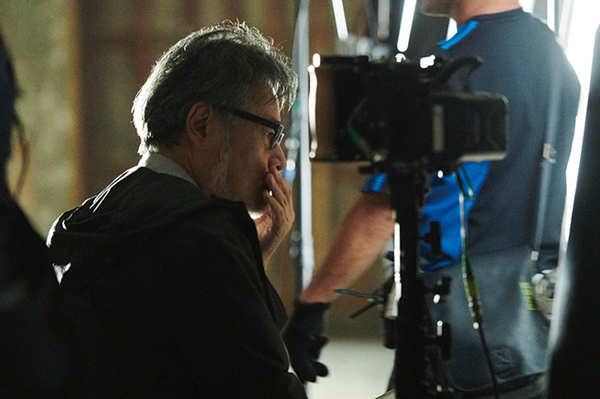
“Although the authentic representation of a period had been difficult, I found it was not only me but all the staff who enjoyed and shared exciting experience to keep tension and fulfillment coming from the creation of a world out of nothing based on the fiction. Compromising the reality and trying no other alternatives, as always with us, is not the reason to shoot. We make film just to create the reality. It was like going back where we started making movies with everybody’s enthusiasm involved. You know, even after detailed background research, still we are never to be guaranteed much as to the legitimacy of our choice of the costume. We employed moulds of clothings of the time, and still retained as many choices in their color with regardless of their legitimacy. So, all the costumes were tailored by ourselves. However, my threshold of choice inevitably reflects the quality of earlier Hollywood movies. Only cinematic owns importance in my decision making. With my recollections of Hollywood movies at heart, I film the drama. I am just a cinephilia...”
The story which gradually unveils restless and damaged relationship between a man and a woman appearing as an ideal couple exactly overlaps the fluctuations and the ruptures in history and politics those days and that overwhelmed me. The husband pursuing the freewheeling life under wartime regulations, and his wife who loves him and nevertheless is incapable of abandoning her innocent patriotism. At least, I have never seen a romantic drama emphasizing historical and political background to this level among Japanese films until now.
“Surely, either I have barely seen a film like this in Japan. I though that the plot written by Ryusuke Hamaguchi and Tadashi Nohara was the authentic one in Europe. I can hardly ever conceive such plot as rendering persons loving and cheating each other. The one thing that bothered me most was where to end the story because of historical nature of it. The romantic or suspenseful drama can find its own ending, but the historical one is the open endings. The history develops its own story with airstrikes or the end of war. Just because the story has unusual historical backgrounds behind, pure romantic or suspenseful approach leaves something unapproachable. Even now I really don’t know which ending was right.”


Shooting a film in Kobe was the starting point of this project. It was Kiyoshi Kurosawa’s birth place. Considering the abstraction of locality and nativeness is a prerequisite of his film making, it is doubtful if he holds nostalgic empathy to “the hometown”....
“Yes, I am originally from Kobe, but so what? Well, I have never tried to put a certain reflection of my birthplace in my works. But locals often told me that my heartless attitude shows where I am from and that is that of typical Kobe (laugh). As we have already lost many of the landscapes those days in Kobe, so the shooting locations took place in the suburbs of Tokyo... However as I know what Kobe is, so those landscapes were hardly seen as those in Kobe. So I suffered the unusual conflict over the reality represented by these locations. And also the language mattered a lot. On the contrary to above mentioned, hearing fake Kobe intonations spontaneously made me to correct them very strictly (laugh). Accordingly, we changed the birthplace of two leading characters to Yokohama, and then made the standard Japanese intonations OK. But still that left some difficulties with the roll of a maid served for the couple, performed by Tsunematsu (Yuri). She had never had any chances to speak in Kansai intonation. But I know she had tried so hard. You know, if the acting is good enough, the correctness in the vernacular does not matter any.”
PROFILE: Kiyoshi Kurosawa (黒沢清)
Born in Kobe on July 19, 1955, Kiyoshi Kurosawa began making 8mm films in college. Sweet Home (1988) marks his commertial debut. 1997’s Cure has received international acclaim. Then he directed well-received films, License to Live (1998) and Charisma (1999). Pulse (2000) gets the International Film Critics Awards (the FIPRESCI Prize) at the 54th Cannes Film Festival. In 2016, he derect the first international film Daguerrotype. With Wife of a Spy, He won the Silver Lion for Best Direction at the 77th Venice International Film Festival. Kurosawa’s directiion and his works are highly appreciated domestically and internationally.
FILM INFORMATION
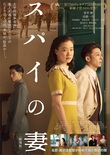
Wife of a Spy
Directer: Kiyoshi Kurosawa
Writers: Ryusuke Hamaguchi, Tadashi Nohara, Kiyoshi Kurosawa
Music: Ryosuke Nagaoka
Casts: Yu Aoi, Issey Takahashi, Ryota Bando, Yuri Tsunematsu, Minosuke, Hyunri, Masahiro Higashide, Takashi Sasano
Distribution: Bitters End
(2020, Japan, 115 minutes)
Released in Japan on 16 October, 2020 at Shinjuku Piccadilly and other theaters.
https://wos.bitters.co.jp/