Here is a potential answer to the challenge of how to incorporate electronic sounds into the language of contemporary music
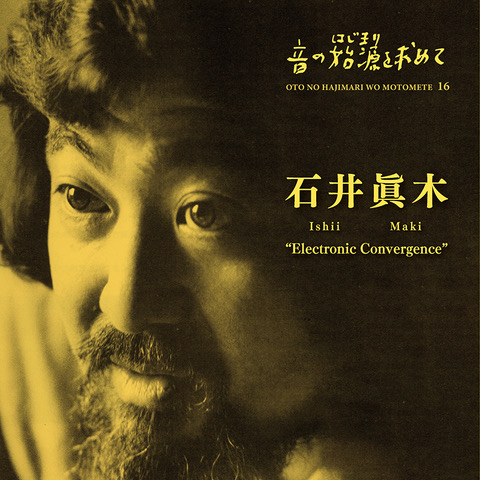
Maki Ishii. He may be best known to the public for his majestic and magnificent film score for Teito Monogatari: The Tale of the Imperial Capital, which draws on a vast array of historical music traditions. It was a brilliant work characterized by the intricately layered ostinatos, echoing the style of his mentor, Akira Ifukube. He is one of composers who had pushed the frontier of Japanese contempory music together with Yoshiro Irino and Makoto Moroi. This CD is the latest release from the reliable The Beginnings of Japanese Electroacoustic series. Focusing on electronic music on the disc, his works stand apart from those that are mere imitations of Western styles or simple adoptation of “new tools” emerging from the Western Music History. Likewise, his works leave far behind any works that attempted a seemingly “new” approach of adopting Japanese traditional music but failed, resulting in a mere juxtaposition of the two.
Maki Ishii Electronic Convergence: The Beginnings of Japanese Electroacoustic 16 Maki Ishii Sound3(2026)

While typical titles like “For (name of the instrument) and Electronics” are common in the CD as well, listening to them together reveals how these elements were essential to his music. It is a remarkable achievement that he utilized electronic sound as a common language to bridge East and West, making them inseparable within his creative output. This collection compiles his works from 1965 to 1974. For instance, 1965 was the year John Cage’s Variations V and Karlheinz Stockhausen’s Mixtur were composed. Superb works featured here deserve to be discussed along with these historic milestones.
As noted in the liner notes, a strong conviction “treating electronic sound as the integral part of the instrument” drives his works. None of the works compiled here are composed by purely eletronic. They are combinations of live instruments and electronics, employing the so-called electroacoustic approach. As mentioned, while other works of electronic music give an impression like a mere “juxtaposition” of independent parts, Ishii’s works bring a rare blance of logic and innovation in both composition and sonority. Simply overwhelming. A must-listen.