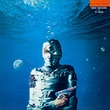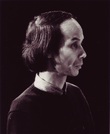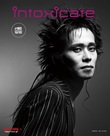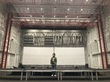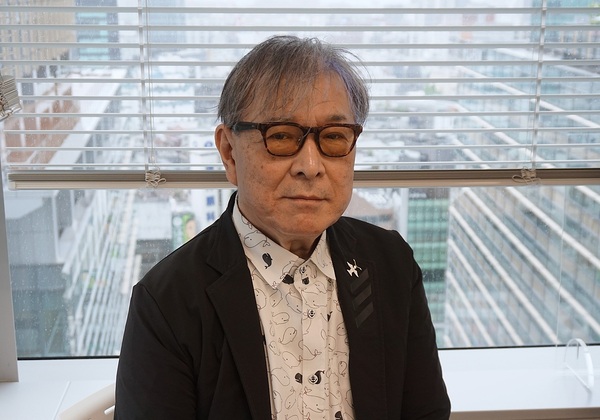
Four master pieces from the formative years has just reissued from Sony Music under the title “The Dawn of Synthesized Music in Japan”.
It was as early as the 70s when synthesizers were widely introduced into pop music in Japan. Four masterpieces from the formative years has just reissued from Sony Music under the title “The Dawn of Synthesized Music in Japan”. The overall curation was directed by Hideki Matsutake, who was an apprentice of Isao Tomita and the programmer for YMO. Here in this interview, he traced back his recollection as a groundbreaking programmer in the synthesizer music in Japan while discussing these four works.
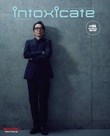
First is The Joyful Christmas (1976) by The Electro Santa Claus. The group was an alias for The Bach Revolution who released another masterpiece Yet in the Depth of Mundane Affairs around the same time.


That’s right. They were with a company called Jan EMS specializing in synthesizer rentals and programming-meaning they were in the same line of work as me. They featured hymns and the like on this album. While hymns might look simple in terms of chord structures, they are very tricky to arrange properly. They were well-versed in the language of classical music, so they knew what they were doing. Also, they blended animal calls that children love, and smoothed out the rhythms to keep them gently on the ears. Listening to the album now, I realize that they mastered the synthesizer from a completely different angle.
So, you could say they were your friendly rivals in the industry, couldn’t you?
Yes, I guess so, but we all got along well. There were not many people involved in this line of work then, so we often exchanged information all the time. Though we did not share our own secrets, we talked a lot about things like what hardware we bought or what we were using. That community spirit led to the birth of JSPA (Japan Synthesizer Professional Arts) in the 80s.
Was the term “manipulator” already being used back then?
No, not yet. I never really liked that term. Because it originally referred to the telephone switchboard operators. If my memory is correct, it was YMO’s original manager who started using it. Since the 90s, “synthesizer programmer” has been the standard term. Back in the mid-70s, our primary task was still just synthesizing sounds, so I guess we were just called “the synth guy” or “synth polishers” half-jokingly.
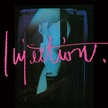
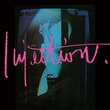
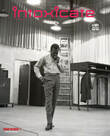
Next, let’s move on to Injection (1979), released under Makoto Yano’s Makoto Highland Band project. Back in the 7s, you and Makoto had a very close professional relationship, right?
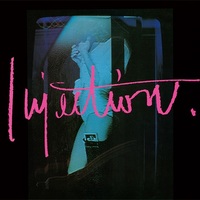
Yes, indeed. It was Yoshitaka Minami’s Skyscraper Heroine (1973) that first involved me in pop music. Yano was working as both an arranger and a keyboard player on the album and I supported him on various other projects since then. However, I didn’t work on this album. It might have been just because I was starting to get involved with YMO around that time. The synthesizer player on this album is Shigenori Kamiya. He was originally a guitarist, but he worked on the synthesizer early on and had a lot of equipment in his own private studio. On this album, Yukihiro Takahashi precisely dubbed live drums over the tracks Kamiya programmed with the MC-8, making it feel like a prototype for YMO.
Were you already using the MC-8 back then too?
Sure. I bought it in 1977 right after it came out. The first person I introduced it to was Yano, and I used it for the first time on Akiko Yano’s To-Ki-Me-Ki (1978), which he produced.
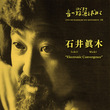
Next is your own album Digital Moon + The Infinite Space Octave, which combines your 1979 solo album Digital Moon with your 1978 sonic experiment mini album The Infinite Space Octave.
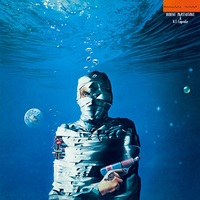
Hideki Matsutake Digital Moon + The Infinite Space Octave Sony Music Direct(2026)
By then, I had already mastered the MC-8, and with my work through YMO, I could program comfortably straight from the score.
Is it true that you coined Japanese term “uchikomi (program or lay down)”?
No, it was Takeshi Fujii who was another programmer, also involved with YMO. Also, he started using the term “pre-pro (pre-production)”.
You recorded Digital Moon which contains covers of “James Bond Theme” and other tracks, was recorded from August to October 1979. That was crazy busy time, jammed right between YMO’s first US gig and their first world tour.
It was hard. A track from this album was used as a demo track when the original Sony Walkman launched in July 1979 to showcase its immersive stereo sound. That promotional arrangement was a major reason why my schedule was so packed.
I understand that The Infinite Space Octave served as the springboard for your involvement with YMO?
That’s right. Haruomi Hosono was working out on a live, man-powered version of “Firecracker” at the time, but he was not satisfied with how it came out. Then his manager called me up and asked if Hosono could check out my synthesizer after listening to my The Infinite Space Octave. He wanted “Firecracker” to be programmed, or rather to run automatically. A few days after I walked him through the basics, I got another call asking me to come down to Alfa Studio. That’s how the recording session for “Firecracker” suddenly began. Honestly, I bet it would blow up if they released that abandoned version today. I wonder if the master tape sits somewhere in a vault?
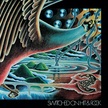
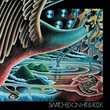
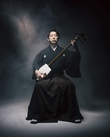
Lastly, let’s talk about Isao Tomita’s Switched On Hit & Rock (1972), which features covers of artists like The Beatles and Simon & Garfunkel. It was considered by the artist himself as a project for practice before “Snowflakes Are Dancing (Clair de Lune)”. In fact, Mr. Tomita referred to this album as an “old scar”, but...
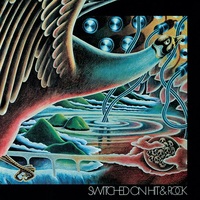
This album was made less than a year after Mr. Tomita bought the Moog III, and I remember he started working on the album after moving tape recorders and mixing consoles from the Sony Studio to his home studio. Honestly, he was figuring things out in complete creative darkness back then, and yet his iconic whistling tones and those quirky ‘pa-pi-pu-pe-po’ cartoon-voice patches that later defined “Snowflakes Are Dancing (Claire de Lune)” had already been completed here.
From when to when did you study under Mr. Tomita at his residence?
From the summer of 1971 to the autumn of 1972. But it was not like he taught me step-by-step. Right from the beginning, when it came to things like how to patch the modules, he told me to work it out on my own. I remember his instructions especially well. “Can you draw a blueprint for a sound? A blueprint for the overall piece of music. If not, you will never create a synthesizer sound. Sound creation is like painting a picture. Conceptualize and plan out where to use red, where to use blue, how to connect them, and predict how the result will turn out”.
In other words, you should have a clear perspective of the entire piece.
Exactly. Because synthesizers can produce an endless variety of random sounds, we tend to compromise without contemplation. Mr. Tomita could have embodied the overall blueprint of “Snowflakes Are Dancing (Claire de Lune)” he already had in mind. He knew how Debussy’s piano work would sound if arranged for a full orchestra. I keep his principle throughout my life. He once told me “I don’t consider you my disciple. A disciple means an assistant who reproduces what I do. But it means nothing for you to recreate my patches. You must find your own sound.” Yet, I believe that he is my life-long teacher. After YMO achieved success, he told me, “You finally produced your own sound”. I was moved to tears, and I felt like I had finally graduated from his mentorship.