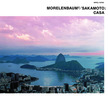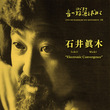
The new release in 2026 remastered masterpiece Casa
Recording at Jobim’s home using his piano.
Quite some time ago, a jazz pianist lamented, “(Antônio Carlos) Jobim’s songs and bossa nova are guitar music, so it is difficult to bring out the atmosphere of that music on the piano.” For a while, those words hung over me like a curse, dominating my impression of Brazilian music. In fact, the music heard from the well-known Jobim-related albums of the 1960s was mostly labeled as bossa nova, and the guitar sat at the very center of the ensemble. The impression that the saudade of Brazilian music is something brewed by the guitar seemed, in one sense, to be the truth.
It was only in the 1970s that Jobim’s music finally emerged, enveloped in the dense, majestic orchestration of Claus Ogerman. It was a dreamlike orchestral work, reminiscent of Ravel’s Shéhérazade, which Jobim as the composer narrated in Brazil. From then until his passing in December 1994, numerous recordings — including live performances — were released. Inédito, his final recording produced at his home and released posthumously, was an album that captured, in his unique way, the living influence of Western music on Brazilian music within him. Even in Tom Canta Vinícius, released in 2000, the intimate atmosphere inherent to bossa nova was replaced by the dense space of chamber music, allowing Jobim’s unique sound to resonate.
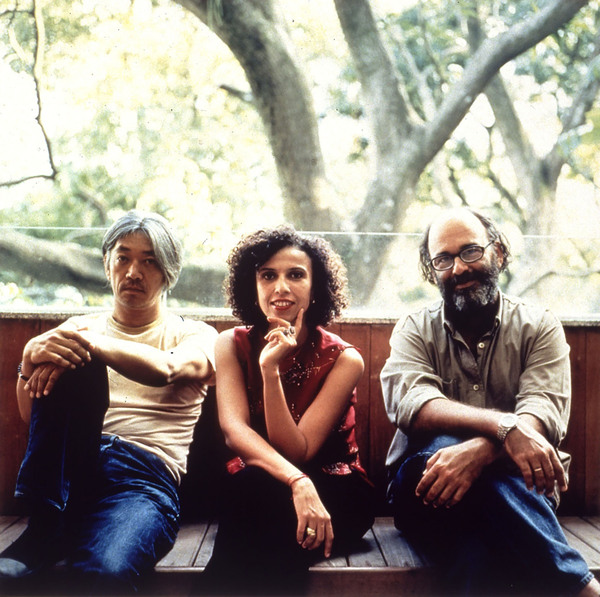
When Morelenbaum²/Sakamoto’s Casa was released in 2001, the outline of Jobim’s music was presented with absolute clarity through piano, cello, and voice, and I felt that the universal value of his music had finally been revealed. This was the result of a profound exchange of soundscapes and the musical bloodlines running through Jobim’s work — nuances that could only be felt and shared by Jaques Morelenbaum on cello, Paula Morelenbaum with her vocals, and Ryuichi Sakamoto on piano, all of them are musicians who embrace and play all genres of music. Without these three, Jobim’s music would never have resonated in this way.


In June 2026, a remastered edition will be released on CD and as a double-LP set, featuring two bonus tracks previously available only on overseas editions: the 2001 live recordings from Akasaka, “Samba do Avião (Live)” and “Improvisation (Live).” Listening once again to the version already available in high-resolution streaming, we can hear how the timbre and touch of the piano, along with the cello’s tone and subtle shifts in dynamics, add shifting colors to the calm, quiet expression of Casa’s music. I look forward to hearing what the newly remastered CD sound will convey.
Listening to these higher-resolution audio sources allows us to perceive details that went unnoticed before. One example is the difference in piano tone from track to track. I never noticed this at the time of the original release, but comparing the opening track “As Praias Desertas” with “O Grande Amor” toward the end, the latter seems to have a somewhat sharp, metallic resonance mixed in, whereas the former feels completely free of it. According to an interview article published in Latina magazine around the 2001 release (written by Jin Nakahara), when Ryuichi Sakamoto visited Jobim’s home under Jaques’s invitation, there were two pianos, one with the sheet music for Chopin’s Preludes and the other with Debussy’s. However, I do not recall the press releases or interviews of that time mentioning whether both pianos were used actually for the recording. Furthermore, a similar matter seems to occur in Jobim’s own home-recorded album Inédito, where a piano tone close to the one in “O Grande Amor” can be heard on many tracks. This might simply be a matter of piano regulation, voicing, or tuning. Ultimately, it remains nothing more than a personal impression.
In an interview with a British music magazine, Jaques shared his impressions of Jobim and Ryuichi Sakamoto like this: “Playing with Jobim makes you realize that to perfectly balance artistic beauty with structural clarity, you need to use every means of expression with absolute economy. From Sakamoto, I learned about breathing — how silence can be an incredibly expressive tool, and how music narrates what it truly means to be alive.”
At that moment, Sakamoto awakened Jobim’s piano from its silence, breathing life back into the Brazilian music that bossa nova had seemingly forgotten. “Ars longa, vita brevis” (Art is long, life is short,) as they say...