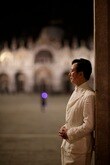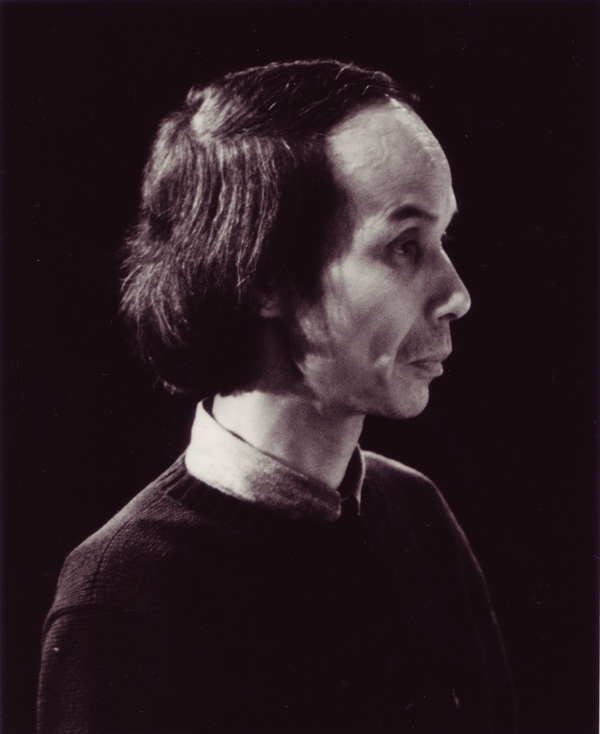
I was reminded that thirty years have passed since the composer Toru Takemitsu passed away. This implies that those born in that very year he passed, will turn thirty this year. “Art is long, life is short.” I recalled these words of Hippocrates, which Ryuichi Sakamoto so fondly quoted. I wonder just how much the world has listened to his music over these past thirty years.
This coming September, Art Tower Mito, where Takemitsu once sat on the panel for the Hidekazu Yoshida Award, will dedicate the opening session of its brand-new lecture series to his works on September 5. After that, a concert titled “The Portrait of Toru Takemitsu” will be held on September 26. In addition, Reigakusha’s fourth concert in the Konjaku Gagaku Collection series, which they have been presenting at the hall, will feature Shuteiga-Ichigu on October 4.
The focus of this report is “The Portrait of Toru Takemitsu.” The concert offers a retrospective of his works from formative early pieces to his late period, centered on chamber music and vocal works. Captivated by Western music, he once remarked, “For a long time, I only looked into the mirror of the West.” First enchanted by the beauty of music through chanson, he became an insatiable listener — not just of classical and contemporary music, but of jazz, pop, and cinematic scores. He was deeply drawn to jazz and frequently mentioned its influence on his creative process. Even so, it was always difficult to pinpoint exactly where jazz lived in his works, especially his concert pieces. He openly declared an inheritance from George Russell’s Lydian Chromatic Concept, but to me, the connection felt entirely nebulous. However, while revisiting the program for this concert, I put on his piano piece Uninterrupted Rest and suddenly felt the air of a solo, unaccompanied Bill Evans performance. It brought to mind Evans’ piano style from his 1968 recording, Alone. But timeline-wise, Takemitsu began composing this piece in 1952 — years before Evans unveiled that specific vocabulary, a sound unheard of in 1950s jazz piano. This suggests a cross-genre convergence rooted in their mutual affinity for French impressionism. Furthermore, though entirely a personal impression, one might argue that Piano Distance achieves a comparable aesthetic resonance with the late period style of Masabumi Kikuchi.
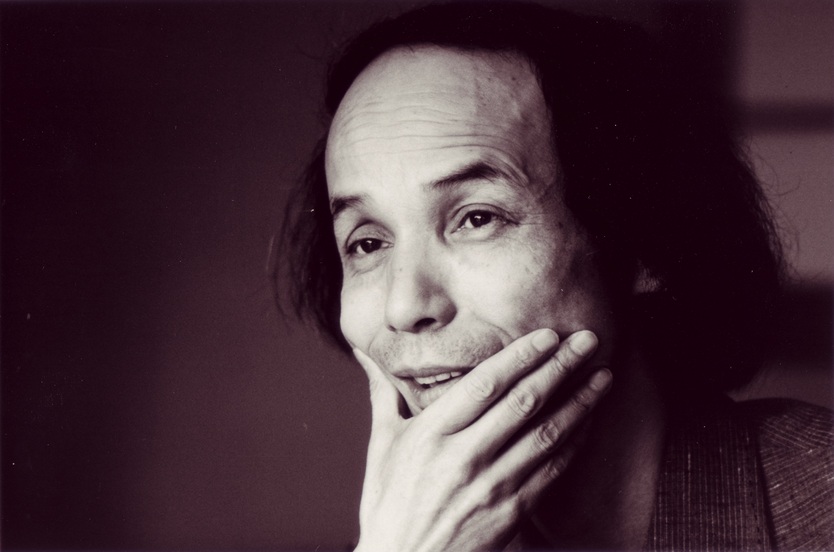
He said it was a chance encounter with Gidayu-bushi that finally caused him — a man who had spent his life gazing only into the mirror of the West — to look into the mirror of the East. He was struck by the futozao shamisen, the vocal melody, and the storytelling style. His creative journey with traditional Japanese instruments brought forth Eclipse for biwa and shakuhachi, and November Steps for those instruments alongside a full orchestra. Another fruit of this encounter is “Shuteiga-Ichigu” a masterpiece written for gagaku ensemble that audiences will hear this October. Such works were the profound outcome of his decision to face the mirror of the East. Nevertheless, fundamental Eastern concepts — such as structural silence, breath control, and the acoustic property of sawari — remain latent within his works for Western instrumentation. Orion for cello and piano, included in the current program, serves as a compelling case study. One might argue that the relationship and overarching movement between the two instruments parallel the dialogue between the Gidayu vocalist and the shamisen. Within this piece, one can discern the traditional gestures of the East dynamically reflected in a Western mirror.
Chanson and Gidayu-bushi (chanting). It may be a mere coincidence, but the forms of music that exerted a definitive influence on him were both rooted in song. Perhaps humming a tune or singing with simple honesty was what freed him from the traps of abstract, hyper-logical composition. After listening to these songs, the program wraps up with Between Tides, composed in ’93. This concert unites musicians who knew Takemitsu directly with a younger generation who didn’t. What will we see reflected in the mirror of Toru Takemitsu?
LIVE INFORMATION
Lecture Series: Exploring Music and Arts with Director Katayama
Session 1: Exploring Toru Takemitsu
Special Project Commemorating the 30th Anniversary of Toru Takemitsu’s Death
September 5 (Sat.), 2026 at Concert Hall ATM, Mito, Ibaraki
Doors open / Concert begins: 13:30/14:00
https://www.arttowermito.or.jp/english/hall/lineup/article_4784.html
The Portrait of Toru Takemitsu
Special Project Commemorating the 30th Anniversary of Toru Takemitsu’s Death
September 26 (Sat.), 2026 at Concert Hall ATM, Mito, Ibaraki
Doors open / Concert begins: 15:30/16:00
https://www.arttowermito.or.jp/english/hall/lineup/article_4783.html
An Invitation to Traditional Performing Arts [Gagaku]
Konjaku Gagaku-shū (Gagaku from Times Past) IV: Shūteiga Ichigu
Special Project Commemorating the 30th Anniversary of Toru Takemitsu’s Death
October 4 (Sun.), 2026 at Concert Hall ATM, Mito, Ibaraki
Doors open / Concert begins: 15:30 / 16:00 (15:45 Pre-talk)
https://www.arttowermito.or.jp/english/hall/lineup/article_4759.html