The present state of young creators accelerated by technology
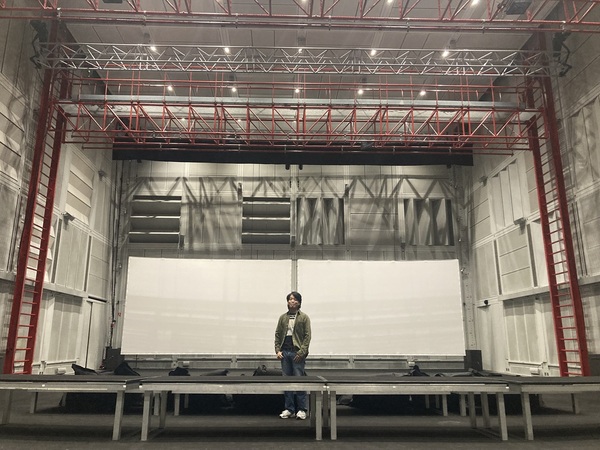
In a corner of the Tokyo Bunka Kaikan (Tokyo Metropolitan Festival Hall), bustling with the removal of equipment and fixtures ahead of a three-year renovation, Hibiki Mukai begins to describe his new composition in a rather gentle tone that contrasts with the nature of his topic, explaining that emotion or feeling - namely joy, anger, sorrow, and pleasure - will be an essential ingredient in the work in progress. On this day, May 25, 2026, the Music Creators Development Project - a collaborative effort between the Tokyo Bunka Kaikan and France’s institute for Research and Coordination in Acoustics/Music (IRCAM) - reached the milestone of its intermediate report. This project, which was also minutely reported in the Intoxicate Vol. 180, seeks to support tech-literate young composers and engineers through a residency program at IRCAM. Mukai is the first composer for this program. In the previous interview about the composition, he described it as a live electronics work. The composition utilizes a computer program designed exclusively for the work to take instrumental sounds - such as string instruments - as input and generate a human voice as output. Two key points stand out from his remarks. First, the acoustic sound of the instruments undergoes a gradual morphing into a human voice. Second, the model for the outputting human voice is based on traditional Japanese music. With the support of AI machine learning and the invaluable contributions of Onna Gidayu masters (a traditional Japanese narrative art where female chanters perform Gidayu-bushi with shamisen) such as Koshiko Takemoto, the development of the program (module) that morphs instrumental tones into human vocals is well on track. Now that the program is ready, the next question arises: what kind of work will he compose? And that was the moment, Mukai mentions, when the concept of emotion, a fundamental part of human being, came to his mind.
“I think emotion has been excluded from academic compositions. It’s indeterminate, so it tends to be pushed away from what we call concepts. Particularly in contemporary music, there seems to be a lot of compositions that focus on being conceptual, carrying philosophical premises, or explaining how a system operates in the composition.”
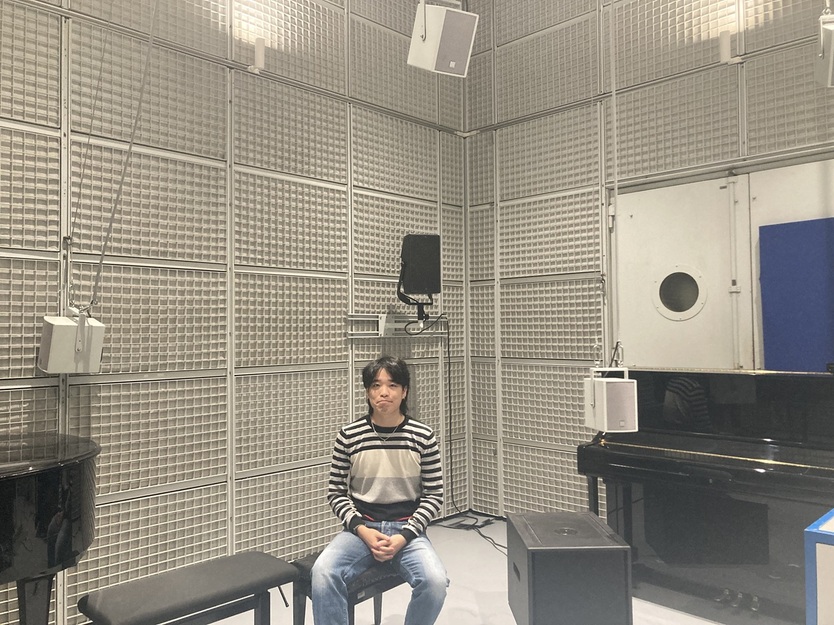
If one defines so-called contemporary music as the opposite of the late Romantic program music, from this point of view, as Mukai notes, emotion can be treated as noise that ruins a composition’s complex sound. Yet we are now far from the mid-20th century peak of modernism. Today, even the most avant-garde techniques are susceptible to aesthetic obsolescence. Furthermore, we must also consider the listening habits of 1990s-born composers like Mukai. Mukai is a composer who has actively listened to contemporary music from other genres, such as Autechre and reggaeton, as he mentioned in his previous interview.
“Last May, I composed a rap track for Bishoujo-Kakumei (Revolutionary Girls) Project, a collaborative production featuring the Teatro de Marionetas do Porto from Portugal. So, I created the track myself, but when it came to putting together the demo for the rap vocal part, I checked out AI generative music communities for reference. What I found was that many prompts were based on emotions like ‘sad song’ or ‘happy song.’ That was the moment I felt we needed to focus on emotion all over again.”
Mukai’s idea of emotion cannot be reduced to a simple, trendy ‘emoi’ (from the English ‘emotional’) feeling, meaning something emotionally striking or evocative. Instead, it signifies the inflection brought about by the manipulation of time and sound. Within the temporal framework of the composition, sounds constantly change how they connect with each other. At the same time, the overall musical structure is always in motion. It was also disclosed at the intermediate report that the commissioned composition is written for an ensemble of flute, violin, viola, cello, and percussion with a duration of approximately ten minutes. After its world premiere at IRCAM in January next year, the work will have its Japanese premiere at Hamarikyu Asahi Hall in February, performed with an 8-channel sound system, at the ‘premiere concert’. Western classical, traditional Japanese, and electronic music will travel seamlessly through a spatial audio environment with the multi-channel sound system based on IRCAM, adding the unpredictability of live electronics. This promises to be the manifestation of a sonic architecture that only Mukai could design.
“While a composer’s primary role is to write pieces, I deeply want to create compositions that are uniquely my own, and I believe this composition will be one answer to that. At my concerts featuring my works, there is an amazing cross-pollination. Audiences who usually listen only to Joruri find themselves captivated by the contemporary sounds, while avant-garde music fans are struck by how creative Gidayu is. Above all, I just want people to come and listen. And from there, I think it’s important that they walk away with their own impressions. I sincerely hope this composition reaches a wide audience.”
LIVE INFOMATION
Music Creators Development Project: Showcase “Premiere Concert”
Fri, Feb. 26, 2027 19:00 (Open 18:30)
At Hamarikyu Asahi Hall (Tokyo)
Detail: https://www.t-bunka.jp/ttn/en/index.html