【Click here for English translation】
YEARS before and after R.S.
先月なかば、私はとうとうタコになった。
というのも、音楽学者で横浜国立大の教授でもあった大里俊晴の七回忌に併せた追悼ライヴに参加したのである。首謀者は山崎春美。詳述はしないが、70年代末から80年代初頭のアンダーグラウンドとサブカルチャーを往還したこの人物はまた、ガセネタやタコといったバンドで大里とは同じカマのメシを喰った盟友であった。パンク~ニューウェイヴ以前にパンクでありニューウェイヴだったひとびと。その時代を体験していないも者は伝聞、風聞のたぐいはほとんど伝説であり、私は僭越ながらこのたび参加で、あの時代の空気をすこしだけ追体験した。もちろん過去の空気を吸うなどできない相談であって、私はそれを掠めたのみだが、音楽は、とくにポピュラー音楽は時代の産物であるのにもかかわらず、なにかのはずみでそれをのりこえる。タコがそうだったかは客観的な判断にお任せするしかないが、“人捨て節”“嘔吐中枢は世界の源”“宇宙人の春”などの辛辣なユーモアはときを経て、いまでは混迷の度を深めていた。きわめつけは戸川純がロリータ順子の代役をつとめた“な・い・しょ・のエンペラーマジック”で、テクノポップだった原曲は生楽器主体の編成に編曲されており、その隙間を縫って、ヒロヒト天皇役の山崎のブツブツいう声が聞こえる。まさかこの曲のアンプラグド・ヴァージョンを聴く日がくるとは。作編曲者の坂本龍一が聴いたらなんというだろう。私は舞台袖からステージをのぞきながらぼんやりそう思った。この曲はもともと83年のタコの『TACO』収録の楽曲で、その前年に出た坂本龍一と忌野清志郎のコラボレーションのパロディ――というのもヤボだが、83年といえば、まさにYMO散開前夜、坂本龍一は大島渚監督の「戦場のメリークリスマス」を足がかりに、やがて世界規模の活動に乗り出していくことになるのだが、その一方で、フリクションやPhewやタコやら、アンダーグラウンドとの交流にも余念がなかった。世界に打って出るには、まず世界を打ち据えなければならない、と坂本龍一は考えていたかは定かでないが、ポストモダンといい条、80年代初頭は70年代の余燼で、状況はいまほど冷え冷えとはしていなかった。上述の坂本の活動も、そのような状況と無縁ではないとしても、私はいささかしゃべりすぎた。今回はその前段階である70年代の坂本龍一をふりかえりたい。
十代でドビュッシーにめざめ、高校で政治にかかわり、ジャズ喫茶に出入りした坂本龍一は、時代がそうさせた部分はあるとはいえ、早熟にはちがいないのは自叙伝「音楽は自由にする」の回想の片々にもあきらかだが、芸大に入学した1970年を境に、彼のなかの運命が頭をもたげてくる。もっとも彼自身半信半疑のフシもなくはなかった。作曲科の同窓生とはなじめなかったものの、美術学科の連中とのつきあいでゴールデン街に出入りするなかでフォーク・シンガーの伴奏の仕事をえるのは70年代なかばだが、実践に秀でた彼は入学してすぐに授業の一環で“ヴァイオリン・ソナタ”“エチュードI, II”を書きあげている。1970年から翌年にかけてのことだ。
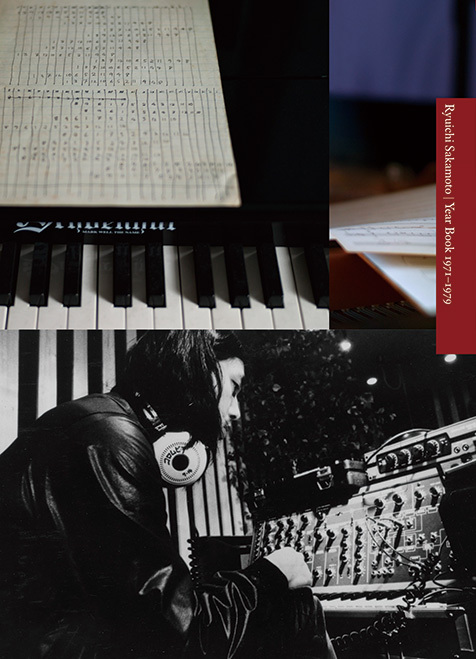

それらの音源(“ヴァイオリン・ソナタ”は84年の音源、“エチュード”は今年の新録)が『Year Book 1971-1979』にはいるのだという。坂本の今年1月17日、63回目の誕生日にはじまったこのシリーズはおもに音盤未収録の音源を編むことで、年鑑形式でアーカイヴを補填する目的もある。もっとも、第一弾は2005年から昨年までをあつかっているのだから順次時代がくだっていくのではない。この第二弾は1971年から79年の10年間、教授と呼ばれる前のひとりの青年がYMOの一員となるとともに作曲家としてひとり立ちするまでをまるまるふくむ、キャリアのなかでももっとも動的かつ混沌とした時代をあつかっている。となると、みなさんのご興味も収録曲にむかおうというものだが、安心してください、はいってますよ。たとえば、“ナスカの記憶(非夢の装置 或いは反共同体関数としての音楽)”はアナログ・シンセと即興演奏を交錯させた13のパートからなる大作である。共演者である火地風水は当時女子高生だった火地風水の面々。園田佐登志が場をつくった明大現音研に出入りしていた火地風水の一員である高橋文子に大里俊晴が恋心を抱いていたのは彼の手になる小説とも回想録ともつかない「ガセネタの荒野」にもみえるが、そもそもガセネタもEX HOUSE主催のコンサートに出演したことがあり、さんざんだったとその本にある。これだけで『Year Book 1971-1979』が当時の日本のアンダーグラウンドに興味をもつ者にとっても第一級の史料であることが立証されたようなものだが、この音源を収録した78年はまた、YMOを結成し、『千のナイフ』をリリースした年であるのも忘れてはならない。坂本の正史の出発点にこのようなものがひそんでいたことは象徴的といわざるをえず、それらはディスク1に収録したクラシック~現代音楽もの、ディスク2のポップ・フィールドでの活動と融和しながら反撥し、実像をたやすく結ばせない。
ディスク1の、はじめてのスタジオ録音である友部正人との“ひとり部屋に居て”、ディスク2の大瀧詠一、伊藤銀次、山下達郎によるナイアガラ・トライアングルの“パレー”などは日本ポップス史の金字塔のひとつでもあるが、坂本龍一はそれらを的確な演奏でささえただけではなく、小説家富岡多恵子との“中折帽子をかむったお父さん”や、大部屋俳優といっても若い方にはちんぷんかんぷんかもしれないが、松竹映画の脇をかためた俳優たちの集団であるピラニア軍団の“役者稼業”では有能な作編曲家の側面をのぞかせる。いやむしろ、私はこれらの仕事に、きまじめな職業倫理より武満徹が黄金期の日本映画にもちこんだジャズや邦楽をソウルやフォーク(ロア)におきかえるのと同じにおいを感じるのである。問題はポップ・フィールドにいかに場を拓くかであり、ようは実験であり学習である。学習といえば、『Year Book 1971-1979』に竹田賢一との75年に結成した学習団の音源が含まれなかったのはかえすがえすも残念だが(そもそもグループの性格上、音源はほとんど残っていないらしい)、竹田賢一の『地表に蠢く音楽ども』に掲載したあの浩瀚なリストと方法から彼らがともに学んだことはけしてすくなくないはずだ、ところが、くりかえすが、音楽はそれがレコードという商品とメディア、テクノロジーやマーケットとも不可分には語れない時代にはいっていた。武満徹の時代とはちがう。
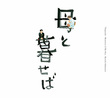
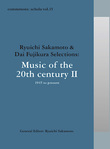
だからといって手をこまねいているわけにもいくまい。坂本龍一のとった選択は単純な戦力でも、ましてや転向でもなかった。音楽を純化する反動でそれを広げにかからなければならない。80年代から90年代にかけての坂本龍一の遍歴は今後陸続とするはずの同シリーズでさらにあきらになるはずだが、こうして彼の来歴を幾多のレコードとともにふりかえられるいま、その軸足にブレのないことはわかりすぎるほどわかる。だから彼が病床に臥せったと聞いて暗澹たる思いにとらわれた者はすくなくなかった。それが杞憂に終わったことはさいわいというほかないが、私は復帰第一弾が山田洋次監督の新作の映画音楽というのも感慨深いものがあった。というのも、坂本龍一は「音楽は自由にする」で、ロンドンでデヴィッド・シルヴィアンに武満徹をひきあわせられたとき、「小津の映画はすばらしいけど、音楽がひどい」と話した。いつかふたりで小津作品の音楽をすべて書き換えましょう。武満とのその約束は彼が鬼籍にはいったため果たせなかったが、坂本龍一が小津の「東京物語」をリメイクした「東京家族」を撮った山田洋次と組むことは、83年――そう、これもまたこの年だ――のふたりのトピックを彷彿させる。坂本は井上ひさしの戯曲「父と暮らせば」を雛形に、舞台を広島から長崎に置き換えたこの作品のテーマに共鳴し音楽をひきうけたという。私は「母と暮らせば」の本編は未見だが、サウンドトラックから推しはかるに、それは訥々とした美しさの滲む作品であるに相違ない。主題の中心には反戦、反核があるが、その裾野には死者と生者のかかわりや家族の問題も広がっている。黒沢清は今年公開した「岸辺の旅」で震災後のリアリティに訴えるよみがえりの物語を描いたが、「母と暮らせば」の虚構空間の感触もおそらくそこと通底するものがあるはずだ。唱歌を思わせる旋律をもつテーマ(弦楽とピアノの2ヴァージョン)をはじめ、スコアの大部分はクラシックの書法で書かれているが、古式ゆかしいそれだけでなく、感情の発露を機敏に抑制し、ときにノーノを思わせる瞬間さえおとずれる。思えば、坂本龍一はこと映画音楽にかぎれば、直截に作家性のひとであり、それはおもに幼少期からのクラシックの聴取体験に由来している。そしてまた原体験は彼が音楽を体系づけるときの前提でもあり、こちらも1年ぶりの刊行となる『commmons schola』の第15弾では承前となった大戦後の20世紀音楽がテーマの座談で、現代/実験音楽にたいして、いまなお変わらぬ健啖ぶりを彼はそこでしめしている。

ちまたでは、ケージを音楽の零度とみなし、そこに歴史の終わりをかさねるやり方がいまだ支配的――というより、終わったあとのことは考えるにあたいしない――だが、これをポピュラー音楽の側から概観すると、90年代をひとつの境に様式が枯渇していったのとの裏表だともいえなくはない。ジム・オルーク在籍時のソニック・ユースが20世紀の終わりに放った『Goodbye 20th Century』が、ケージからウォルフ、ライヒ、ポーリン・オリヴェロスやオノ・ヨーコや小杉武久までをあつかいながら、ジョージ・マチューナスをそこに加えたことで、フルクサスあたりで線引きしているのがわかるのとは対照的に、坂本龍一はこのCDブックで、トータル・セリエルやスペクトル学派のその先の先の21世紀に活きる20世紀音楽の資産を探りあてようとする。ポップカルチャーは資産を食いつぶしハイカルチャーはそれを温存するというのは、あまりに乱暴な図式だとしても、本書で浅田彰がカーデューとブライアン・イーノの関係を高橋悠治と坂本龍一のそれになぞらえたように、それを受けて、坂本自身、カーデューを現代音楽の作曲家というよりそれ以外とみなしたように、境界線とクロスする動きが問われるのは前世紀となんら変わらない。月並みな結論だが、問題はそこでの身ぶりであり、今後たとえ坂本龍一が軟体動物めいた意想外の動きをしたとしても、ここまでおつきあいいただいた読者なら、それを貫くものがあるのがおわかりだろう。
坂本龍一(さかもと・りゅういち)
52年、東京生まれ。78年『千のナイフ』でソロデビュー。同年、YMOを結成。散開後も多方面で活躍。常に革新的なサウンドを追求する姿勢は世界的評価を得ている。2014年7月、中咽頭癌の罹患を発表し治療・療養に入ったが、本年8月に復帰を果たした。
寄稿者プロフィール
松村正人(まつむら・まさと)
72年、奄美生まれ。編集者、批評家。監修/編著の近作に「別冊ele-king ジム・オルーク完全読本」「ポストロック・バトルフィールド」「文藝別冊 ニール・ヤング」。湯浅学氏率いるロック・バンド湯浅湾のベース奏者。
PHOTO EXHIBITION INFORMATION
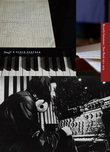
Red Bull Studios Tokyo Presents “Behind the Tracks” with ARTIST: Ryuichi Sakamoto × Wing Shya Photo Exhibition
映画「母と暮せば」オリジナル・サウンドトラックの制作現場を追ったドキュメンタリー写真展
<第1部>
○12/12(土)11:00-20:00
○12/13(日)11:00-18:00
会場:Red Bull Studios Tokyo
料金:入場無料
*本展は映画「母と暮せば」の前売り券・半券、またはオリジナル・サウンドトラックをお持ちの方のみへの特別公開とさせて頂きます。混雑時は入場を制限させて頂く場合がございますので予めご了承ください。
<第2部>
○12/19(土)11:00-20:00
○12/20(日)11:00-20:00
会場:BANK GALLERY(東京・原宿)
料金:入場無料
www.redbullstudios.com/tokyo/articles/ryuichi-sakamoto-x-wing-shya-photo-exhibition
映画『母と暮せば』
監督:山田洋次
脚本:山田洋次、平松恵美子
音楽:坂本龍一
出演:吉永小百合/二宮和也
制作・配給:松竹株式会社
◎12/12(土)全国ロードショー
hahatokuraseba.jp
Ryuichi Sakamoto
YEARS before and after R.S.
Written by : Masato Matsumura
Some time mid-November, I finally became a Taco -
To be more specific, I was there to perform at the memorial gig remembering the late Toshiharu Osato -the musicologist, professor at Yokohama National University and member of bands including Taco or Gaseneta- which was held in conjunction with the 6th anniversary of the death of the musician.
The mastermind behind the whole event was Harumi Yamazaki. I am skipping the details here, but basically this man who used to wander back and forth the underground and subculture scenes of the late 70s to the early 80s, was also the close ally of Osato who lived under the same roof in their days of the bands Gaseneta and Taco. The avant-gardists who were already punk and already new-wave even before the waves of punk and new-wave washed in. For those who have not lived the times back then, the hearsay and tales only work out as mere legends, but given the honour to participate in the event this time, I was able to get a bit of a taste the milieu of the times. Of course there is no such of thing as my actually breathing in the air of from the past, and all I can say is that I simply caught a whiff of the atmosphere, but still, the thing about music, especially pop music, is that even though it is supposed to be a product of the times, out of a whim, sometimes they simply override such concept.
Whether Taco lived up to that, I will have to leave that to an objective judgement, but now, the acrid humour that was injected in songs such as “Hito Sute Bushi (meaning Person’s abandonment song)”, “Outochusu Wa Sekai No Minamoto (meaning The Vomiting Center is the Origin of the World)” or “Uchujin No Haru (meaning Spring of Aliens)” seems to have increased its degree of chaosness over the passing of times. The granddaddy of it all would be “Naisho no Emperor Magik (meaning The Secretive Emperor Magic”) in which singer/actress Jun Togawa fills in for Lolita Junko (Junko Shinozaki) who was the original singer for the song and also whom Togawa enjoyed friendship with. The original which used to be on the techno side had been rearranged to a mix centering more around live-play, and at the gaps in between, Yamazaki manages to squeeze in his muttering, taking the role of Emperor Hirohito. Never did I ever imagine that there’d be a day I’d be listening to an unplugged version of this song. What would the writer/composer/arranger, Ryuichi Sakamoto say if he heard this? – I blankly thought to myself, peering out at the stage from the wings. The song was originally on the 1983 “TACO” album by Taco, and to easily call it a parody of “Ikenai Rouge Magic”, - the collaboration song between Sakamoto and Kiyoshiro Imawano that was released the year before, - would already be rather on the lame side.
Though, the year 1983 was one that saw its significance in the sense that just before going into the ‘sankai (break-up)’ tour of his band YMO, Sakamoto started to set foot on new grounds for world scale activities, gaining a foothold through the film, “Merry Christmas, Mr. Lawrence” (1983) directed by Nagisa Oshima. Still at the same time, he kept himself diligently establishing ties with the underground players such as the bands FRICTION, Phew or Taco. It is unclear whether Sakamoto had in his mind the notion that those who wish to sally forth into the world must first thrash it, but anyhow, with the post-modern climates and embers from the 70s still glowing, the early 80s was not such the icy place as the world is today.
Putting aside the presumptions whether the aforementioned movements of Sakamoto were or were not unrelated to such state of the world, it seems that I have somewhat talked too much. I would like to take this opportunity now to look back on the artist in the 70s, - his whereabouts and howabouts before he sets out for the said movements.
Awakening to Claude Debussy in his teens, getting involved in politics in his high school days and frequenting Jazz Kissas (jazz coffee shops with the often superb sound systems in Japan in which listening to music is the primary purpose) from those days, though some part of it owes to the trends of the time, Sakamoto was unmistakably a precocious young blood, which is also evident in the fragments of commentaries penned in his autobiography, [Ongaku wa Jiyuu ni Suru (meaning Music Frees)]. Though, it was not until his entrance to Tokyo University of the Arts in 1970 that his fate seemed to start raising its head. And most justifiably, it isn’t surprising that he himself was dubious about the whole thing too.
Finding it hard to blend in with his fellow alumni at the Department of Composition, Sakamoto starts his frequent visits to Shinjuku Golden Gai (a small area of Shinjuku composed of a network of narrow alleys, famous for its nightlife and as an area of architectural interest) through socializing with friends from the Fine Arts Department, and there he obtains his job to play as a session musician for a folk singer in the mid-seventies. But even before that, being the accomplished practitioner, he is known to have already completing writing up a “Sonate Pour Violon Et Piano” and “Quatuor A Cordes. Etudes 1.2” as part of his curriculum at the university, immediately after entry. That is some time during 1970 to the following year.
Those sound sources (“Sonate Pour Violon Et Piano” from the recordings of 1984 and “Quatuor A Cordes. Etudes 1.2” newly recorded in 2015) is said to be included in the new release of the “Year Book” series, “Year Book 1971 - 1979”. This series started on January 17th, 2015 -which was Sakamoto’s 63rd birthday- and uses a ‘year book’ format that aims to supplement his archive by compiling his never-before-published sound sources. However, given that the 1st of the series lists tracks from 2005 to 2014, it’s not necessarily in a sequential order. This second of the series deals with the most dynamic yet chaotic times of his career, the 10 years from 1971 to 1979, in which this man in his youth –now called kyoju (meaning Professor in Japanese, his nickname)– becomes part of the influential electronic music band, YMO, and also finds his feet as a composer.
Given this, naturally, one’s interest would be directed to the lineup of the recordings, but need not worry, all is covered. For instance, “Memories Of Nazca (Anti-oneiric Device Or Music As A Function Of Anti-collectivism)” is a huge opus consisting of 13 parts that mixes analog synths with improvisation. Co-performing are the members of Kachi Fusui, an improvisation band who at the time were still high school students. The fact that Osato had a crush on one of the members of Kachi Fusui, Fumiko Takahashi -who would often visit the Genon (modern music) club at Meiji University, introduced to her by the avant-garde guitarist and experimentalist Satoshi Sonoda- can be guessed from what’s written in [Gaseneta no Koya (meaning The Wilds of Gaseneta)], the writing by Osato as either a novel or own commentaries (hard to tell), and in the same book, it is revealed that Gaseneta also made an appearance at the concert hosted by EX HOUSE, which seem to have ended up in total blunder.
Even with these anecdotes alone, this new second issue of the “Year Book” series proves itself to be a first-class historical material for anybody interested in the Japanese underground scene back then, but it must be noted also that the year 1978 in which the aforementioned song was recorded, was also the historical year that YMO was formed, as well as the year that saw the release of Sakamoto’s debut album, “Sen no Naifu (eng. Thousand Knives”). That songs like these were skulking in the shadows at the very beginning of the authentic history of Sakamoto is nothing but symbolic, and while still appearing to work in harmony with the works seen in Disc 1 of classical ~ modern music or Disc 2 of the pop field, they still turn their backs and act repulsively, making it hard to get a proper sense of his real character.
On Disc 1, there is “Hitori Heya ni Ite (meaning Alone in the Room)”, the first studio recording he did with Masato Tomobe the folk singer/poet, and on Disc 2, “Parade” from the trio of the Niagara Triangle -a legendary folk band by legendary singers, Eiichi Ohtaki, Ginji Ito and Tatsuro Yamashita- and while both are considered to be the gold standards of Japanese pops history, in this collection, it is not only his elegant renditions supporting the pieces that shows its brilliance. In “Nakaoreboushi wo Kamutta Otousan (meaning Father Wearing a Felt Hat)” with novel writer Taeiko Tomioka, or “Yakusha Kagyo (meaning Actor’s Business)” by Piranha Gundan -a group of bit actors from the leading film company, Shochiku Eiga-, Sakamoto offers glimpses of his competent abilities as an excellent composer and arranger. Actually, rather than earnest vocational ethics, I sense the same smell as Toru Takemitsu -the composer who achieved renown for works combining Western classical music and the sounds of traditional Eastern instruments- when he introduced jazz or Japanese pop music to Japanese motion films in its golden age, only replacing them by soul music or folk(lore) in this case. The issue is how to lead and make the way in the pop field, which all comes down to experimenting and learning.
Speaking about learning (gakushu in Japanese), I cannot stress enough how disappointing it is to see that the sound source of Gakushuudan -a unit formed in 1975 with music critic and taisho koto player Kenichi Takeda- is not included in this “Year Book 1971 - 1979” (, though considering the nature of the group, no sound sources seem to be preserved anyway). Surely, what was learnt by both of them from the prolific list and methodology provided in Takeda’s critique [Chihyo ni Todoroku Ongakudomo (meaning Musics Rumbling on the Surface)] should have been of no small significance. Still, and let me stress this again, times had moved on to a place where music could no longer be discussed without separating it from this product and medium called a ‘record’, nor from technologies and markets. It was an era so different from when Toru Takemitsu was around.
But then again, we can’t just sit around idly. The choices made by Sakamoto were not even simple forces, let alone, game-changers. They were backlashes to the attempted purification of music of the times, and he knew he had to drum it up. Sakamoto’s itinerancy from the 80s to the 90s is expected to be revealed even further in this Year Book series that we earnestly hope follow-through going forward, but even now when we can look back on his provenance with the abundance of records he has put out, it is clearly evident that his attention has never been swayed, even in the slightest.
So when the news came about that the artist had been taken with illness, so many found their spirits sink, laden with the sense of loss. It is nothing but sheer joy that it ended up as needless fear, but for me, to find out that his very first work after his comeback to be the score for the latest film by Yoji Yamada -the veteran director known for the “Otoko wa Tsurai yo” series or “The Twilight Samurai”- is profoundly moving. According to his autobiography, on meeting Toru Takemitsu in London introduced by David Sylvian, the two entered into an animated conversation of “how Ozu’s (Yasujiro Ozu –film director and screen writer, regarded as one of the most influential directors)- films are great, but the music sucks”, and agreed that the two should get together to rewrite all the scores on Ozu’s film works. They were never able to come up with the goods as Takemitsu joined the majority, but the fact that Sakamoto was teaming up with Yoji Yamada who did the remake of Ozu’s “Tokyo Monogatari (eng. Tokyo Story)” –the 1953 film Ozu is most well-known for- into “Tokyo Kazoku” reminds me of this anecdote of the two that took place in 1983 (, yes again, that year 1983).
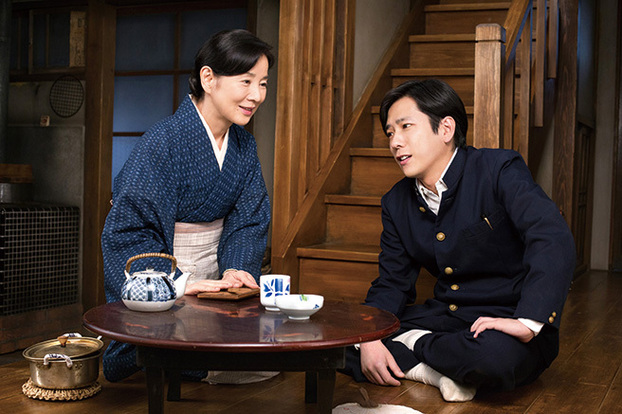
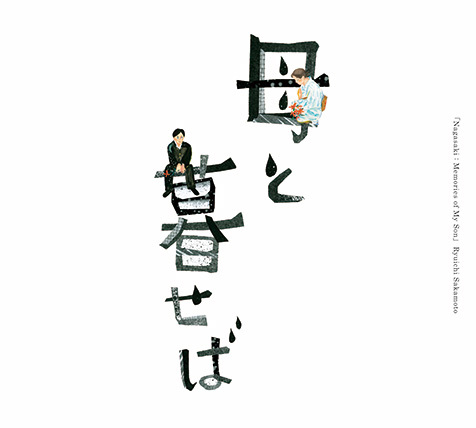
It is said that Sakamoto took the job, deeply identifying with the theme of the story that was based on the play by Hisashi Inoue -playwright and author- “Chichi to kuraseba (eng. The Face of Jizo)” but with the setting transposed from the city of Hiroshima to Nagasaki. I have not yet seen the film “Haha to Kuraseba (eng. Nagasaki: Memories of My Son)” but gathering from what I hear in the soundtrack, it sure must be one piece of work that projects delicate fragments of true beauty and grace. Antiwar and antinuke are placed at the center of the main subject, but the story also touches on broader issues such as the connections between the deceased and those alive or family issues. Kiyoshi Kurokawa –film director, playwright and writer- portrayed resurrections that spoke to the post-quake (the Great East Japan Earthquake) realities in the film released in 2015, “Kishibe no Tabi (eng. Journey to the Shore)”, which shares the same kind of feel of fictitious space that one would experience in “Haha to Kuraseba”.
Including the main theme of the music (in 2 versions, one in strings and one in piano) of which the melody line is even reminiscent of a school song, most part of the score is created in the manners of classical music, but not just simply giving the nostalgic touch to the score in old arrangements, the outburst of emotions are controlled with astuteness, in some cases bringing moments that remind the listener of the avant-garde composer, Luigi Nono. In retrospect, when it comes to film scores in particular, Sakamoto has undoubtedly always been the man of authentic professionalism which originates mainly in his experience of familiarizing himself with classical music from early childhood. Also, formative experience has always been the basic premise for Sakamoto to systematize music, and his hearty appetite for contemporary/experimental music is proven to remain unchanged, still today, as seen in the round-table talk celebrating the 15th issue of the “commmons: schola” –a series of cross-genre music selections by Sakamoto- released after an absence of a year, based on the theme of post-war music in the 20th century.
To consider John Cage as the degree zero of music and to identify that point as the end of history seems to be the dominant approach with the public, -or rather, it is simply not worth thinking about the future beyond the end-, but from the perspective of popular music, it can also be regarded simply as the other side of the double sides, -that it is merely a reflection of the depletion of styles with the 90s being the turning point.
The album “Goodbye 20th Century” released toward the end of the 20th century by Sonic Youth when Jim O’Rourke was still around, featured artists ranging from John Cage, Christian Wolff, Steve Reich, Pauline Oliveros, Yoko Ono or Takehisa Kosugi, but by adding to the roster, George Maciunas, it is obvious that they had set the Fluxus as the borderline. On the contrary, Sakamoto, in this music selection, attempts to dig up the assets of the music of the 20th century that lives on into the 21st century, so much more ahead of total serialism or spectral music.
To simply go and assume that pop culture eats away at assets while high culture maintains it, is downright crude, but in the way that Akira Asada –postmodern critic and curator- likened the relationship between Cornelius Cardew and Brian Eno to that of Yuji Takahashi –composer, performer and pianist- and Sakamoto, and in the way that Sakamoto, responded to that, accrediting Cardew as anything else rather than a composer of contemporary music, the ways in which the crossing-over of borders raises questions show no difference from the previous century.
A hackneyed conclusion it may be, but the issue is more the gesture there, so even if Sakamoto takes some unforeseen molluscan movements going forward, if you have been tolerant enough to have read this far, you would easily know that there is something unshakeable that he is standing firm for.
Movie "Haha to Kuraseba"
Trailer: "Haha to Kuraseba" [Director: Yoji Yamada] (2015)